Dataview
LIST
FROM #Collection
WHERE file.name = this.Entry-For
📗 -> Insert entry name
🎤 Vocab
❗ Information
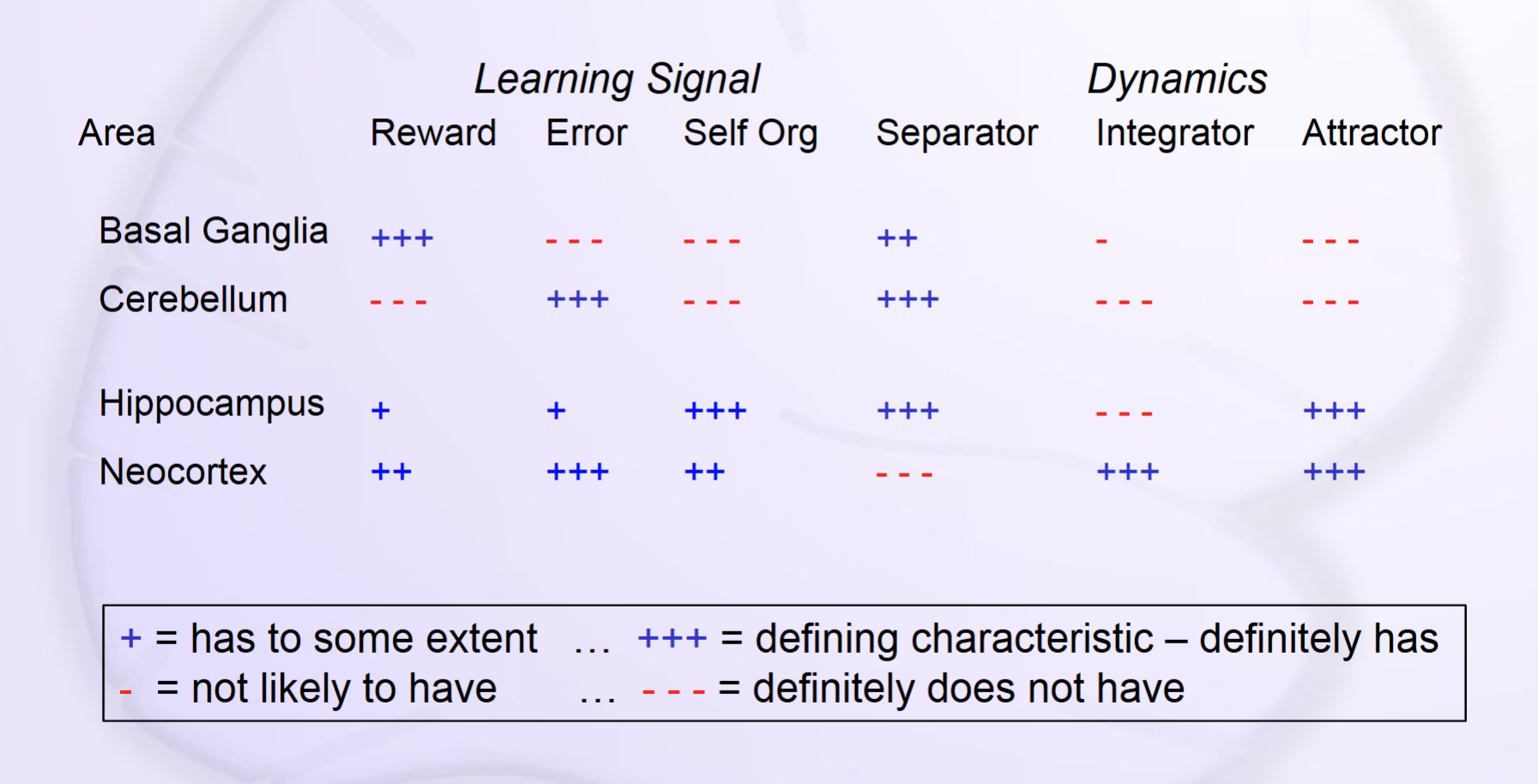
At the subcortical level, the cerebellum and basal ganglia are the two major motor control areas, each of which has specially adapted learning mechanisms that differ from the general-purpose cortical learning mechanisms described in the Learning Chapter Table 8.1. The basal ganglia are specialized for learning from reward/punishment signals, in comparison to expectations for reward/punishment, and this learning then shapes the action selection that the organism will make under different circumstances (selecting the most rewarding actions and avoiding punishing ones; Figure 8.1). This form of learning is called reinforcement learning. The cerebellum is specialized for learning from error, specifically errors between the sensory outcomes associated with motor actions, relative to expectations for these sensory outcomes associated with those motor actions. Thus, the cerebellum can refine the implementation of a given motor plan, to make it more accurate, efficient, and well-coordinated.
✒️ -> Scratch Notes
- Log as you go through entry
🧪-> Example
- Big picture: general reaction
Did you generally find the overall content understandable or compelling or relevant or not, and why, or which aspects of the reading were most novel or challenging for you and which aspects were most familiar or straightforward?)
I found this to be one of the more difficult chapters we've covered in this class, a lot of the material felt very dense and simplified. I still haven't quite wrapped my head around the inhibition of the inhibition when it comes to the Go / No Go pathways, so I'll have to do some further studying regarding that.
- Specifics: specific reaction to one aspect of the reading
Did a specific aspect of the reading raise questions for you or relate to other ideas and findings you’ve encountered, or are there other related issues you wish had been covered?)
I was very pleased to finally see the dopamine RPE mentioned, I've been anticipating this topic for a while. I've encountered it briefly when I was reading about neuroeconomics, but never had the chance to really dive into it.

I was especially happy to hear a bit about how the RPE is biologically calculated, even if that mention was just to address that it is very difficult/convoluted to explain on a biological level. That's always been my biggest question about the RPE, how its calculated and how is it distributed to relevant neurons.
🔗 -> Links
Resources
- Put useful links here
Connections
- Link all related words