📗 -> Handwriting Recognition
Lowkey this paper is useless.
Seems like people implemented the easiest way to format letters and gave no thought to whether it would work or not, and edge cases
1. Overview
Author(s): Jayati Ghosh Dastidar, Surabhi Sarkar, Rick Punyadyuti Sinha, Kasturi Basu
Date of Publication: 19 Jul 2015
Original Publication/Source: Link to the project
2. Project Summary
This paper describes the method to recognize offline handwritten characters. A robust algorithm for handwriting segmentation is described here with the help of which individual characters can be segmented from a selected word from a paragraph of handwritten text image which is given as input.
Domain:
3. Methodology
Describe the methods and techniques used in the project.
- Experimental Setup:
- Data Collection:
- Processing Pipeline:
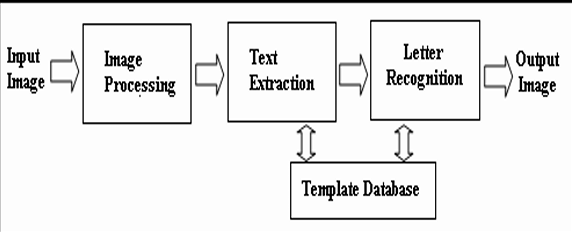
Data Preprocessing and Image Extraction
Input images are cursive handwriting
Images are filtered to obtain the best representation for each word
- What the hell does this mean? Do they go over by hand and pick a word that ‘looks good’??
RBG -> Grayscale
Grayscale -> Binary
Objects too small (<15 pixels) are removed
Line recognition
When the sum of an entire rows black pixels is zero (ie no writing on a row), consider it a line break
Letter Extraction
When the vertical sum of the row is zero, consider it a break
Letter identification
Compare it to a database of numbers and letters, and identify it as the one where the correlation coefficient is the highest
- Evaluation Metrics:
4. Key Insights and Innovations
Highlight what stands out about the project and why it is impactful.
- Unique Approaches:
{{unique_approach}}
- Innovative Solutions:
{{brief explanation}}
- Strengths:
- {{strength_1}}
- {{strength_2}}
5. Challenges and Limitations
Discuss the main challenges faced in the project and any limitations.
Challenges:
- {{challenge_1}}: {{description}}
- {{challenge_2}}: {{description}}
Limitations:
{{limitations}}
6. Results and Conclusions
Summarize the results obtained and the conclusions drawn from the project.
Results:
- {{result_1}}: {{brief description}}
- {{result_2}}: {{brief description}}
Conclusions:
- {{summary of the project’s findings}}
7. Potential Improvements
Identify areas where the project could be enhanced.
- Suggested Enhancements:
- {{improvement_1}}: {{details}}
- {{improvement_2}}: {{details}}
8. Takeaways for Future Projects
List the key takeaways that could inform your own work.
- Lessons Learned:
- {{lesson_1}}
- {{lesson_2}}
- Applicable Techniques: {{techniques you plan to adopt}}
- Inspiration Points: {{specific elements to explore further}}
9. Related References
Provide additional resources or related work that may be helpful for further understanding.