Dataview
LIST
FROM #Collection
WHERE file.name = this.Entry-For
2025 California Neurotechnology Conference
🎤 Vocab
❗ Information
These are my notes for the 2025 California Neurotechnology, a inter college conference for Neurotech clubs across California
EVENT SCHEDULE
| Time | Events |
|---|---|
| 8:00 AM - 8:30 AM | Check-In, Poster Set-up, Breakfast |
| 8:30 AM - 9:15 AM | Opening Ceremony Keynote Presentation by Spero Koulouras |
| 9:15 AM - 9:45 AM | IEEE EMBS Speech by Dr. Erika Ross Ellison |
| 9:45 AM - 10:35 AM | Industry Panel |
| 10:45 AM - 12:40 PM | Poster Session, Networking AULI.TECH Demo, Lunch |
| 12:40 PM - 1:20 PM | Keynote Speech by Dr. Philip Sabes |
| 1:45 PM - 4:00 PM | Brain-Computer-Interface (BCI) Competition |
| 4:05 PM - 5:00 PM | Academic Panel |
| 5:00 PM - 5:30 PM | Closing Ceremony & BCI Competition Awards |
✒️ -> Scratch Notes
Keynote Presentation by Spero Koulouras
He is the CEO of Auli tech (Auli.tech)
- He has been aflicted by ALS and has strove to advance assistive technology
- He presented a presentation edited/voiced exclusively with assistive technology, very touching
As per his Linked In:
An ALS diagnosis in 2019 changed my life, focusing my energy and skills on creating assistive technology for myself and anyone else that can benefit. We formed Autonomous Living Technologies in 2022 to share our developments with the disabled community. We welcome everyone that would like to contribute skills or funds to help us put smiles on faces around the world.
I’ve got 40+ years of experience, 14 at HP and 26+ in startups with responsibilities including CEO, Product and Engineering Management. I’ve worked on development of international standards for VoIP and Bluetooth Low Energy, with a couple patents. My recent focus has been on edge AI/ML. Past projects include a wide-range of Consumer Products, Messaging, Networking, Security, Telecom, VoIP, Mobile, Video, Embedded Systems, Web/Mobile Development and Sports Technology.
Alice Brook - ALS influencer that touched him
Synchron BCI - In a blood vessel, no surgery
Following this, Sandra Karen (a ML tech at Auli tech) gave a speech about how to make the most of the conference and to network
Eria Ross Ellison
IEEE EMBS
- EMBS: Engineering Medicine Biology Society
- NER 2025 Conference 11-14 Nov 2025
Mayo Clinic experience, being roped into a DBS treatment inspired her to change career trajectory from mitochondrial science to neuromodulation
Incomplete history of assistive technology:
- Pace maker - 1958
- Cochlear Stim - 1961-1970
- Spinal Cord Stim - 1968
- Deep Brain Stimulation - 1987
- Vagus Nerve Stim - 1997
- Sacral Nerve Stim - 1994
- Responsive Neurostim - 2015
She then goes on to show the Gartner hype cycle graph, tying it to BCI and placing us in the trough of disillusionment
“If you’re treatment starts with ‘wouldn’t it be cool if…’ you’re likely not targeting the right thing for the patient”
ARC BCI? Onward?
- restore thought-driven movement, famous news story of man walking again
embs.org | neuro.embs.org/2025
Q&A
Career Catalyst? - DBS, shifted from mitchondria to treatment (stim)
How to find needs? - Interviews: Talk to 100 people with the disorder and 100 doctors. Only then will you find the real need.
Industry Panel
Jojo Platt
President at Platt & Associates
- Business side
- “Science pimp”, pairs scientists with doers and funders. Connector
Arash Adami
Founder & Ceo at Alpha Fiber
- Faculty lecturer at SDSU and repeat startup creator
- Repeatedly spoke about his failure with his initial camera concussion detection startup.
- Talked about how to learn from it and move forwards. Assess EXACTLY what went wrong, and how to fix going forwards.
- In his case, it was product market fit, it wouldn’t be a huge selling point for universities and establishment.
- He said the real market was in parents wanting to protect kids.
- Also data, hard to collect good background data for this kind of thing. He said he recommended being scrappy, ‘volunteering’ to record events nobody would usually to get hands on data
Erika R. Ellison
President of IEEE EMBS
- she gave the talk right before this
Ruthie Forney
VP of Products at Precision Neuroscience
- Leads product strategy to advance BCI
- Tried to help geriatric patients, faced systemic issues
- Turned to try and change the system, connecting patients and doctors
Q&A
Applications:
Platt - Wearables, track pre-diabetics
Brrain signals as indicators for glucose. No puncture.
She is usually a big fan of implants in the wearables vs implants debate, implants have much better SNR
Ruthie - BCI, time is now
Adami - BCI, but AI to analyze regins of interest in neuroimaging
Erika - Healthcare is becoming decentralized, democratized, etc. Autonomous?
Funding
Platt - Venture funding and DARPA.
- NIH slowdown too of course, will likely force new sources of funding going forwards
Ruthie - BCI is estimated at a 400bn market opportunity. Plenty of room.
Adami - Investors want to ‘de-risk assets’, got pushed to test in academia.
Advises to focus on MVP, be targeted and constantly aware of the possibility of money running out
Safety and Privacy
Erika - FDA. Very specific regulations on both safety and privacy, health and data both. Collect data WITH patients.
Ruthie - Total Product Life Cycle Program (TAP?). Ethics should be at center of questions
Startups
Adami - Used cameras to calculate head acceleration/deceleration and G-Force. Correlate later with sideline checkup.
Platt - Cleveland Neurodesign Program. A theoretical bootcamp on how to take a neuro product end-to-end.
Philip Sabes
Cofounder of Neuralink, Starfish neuroscience, Integral
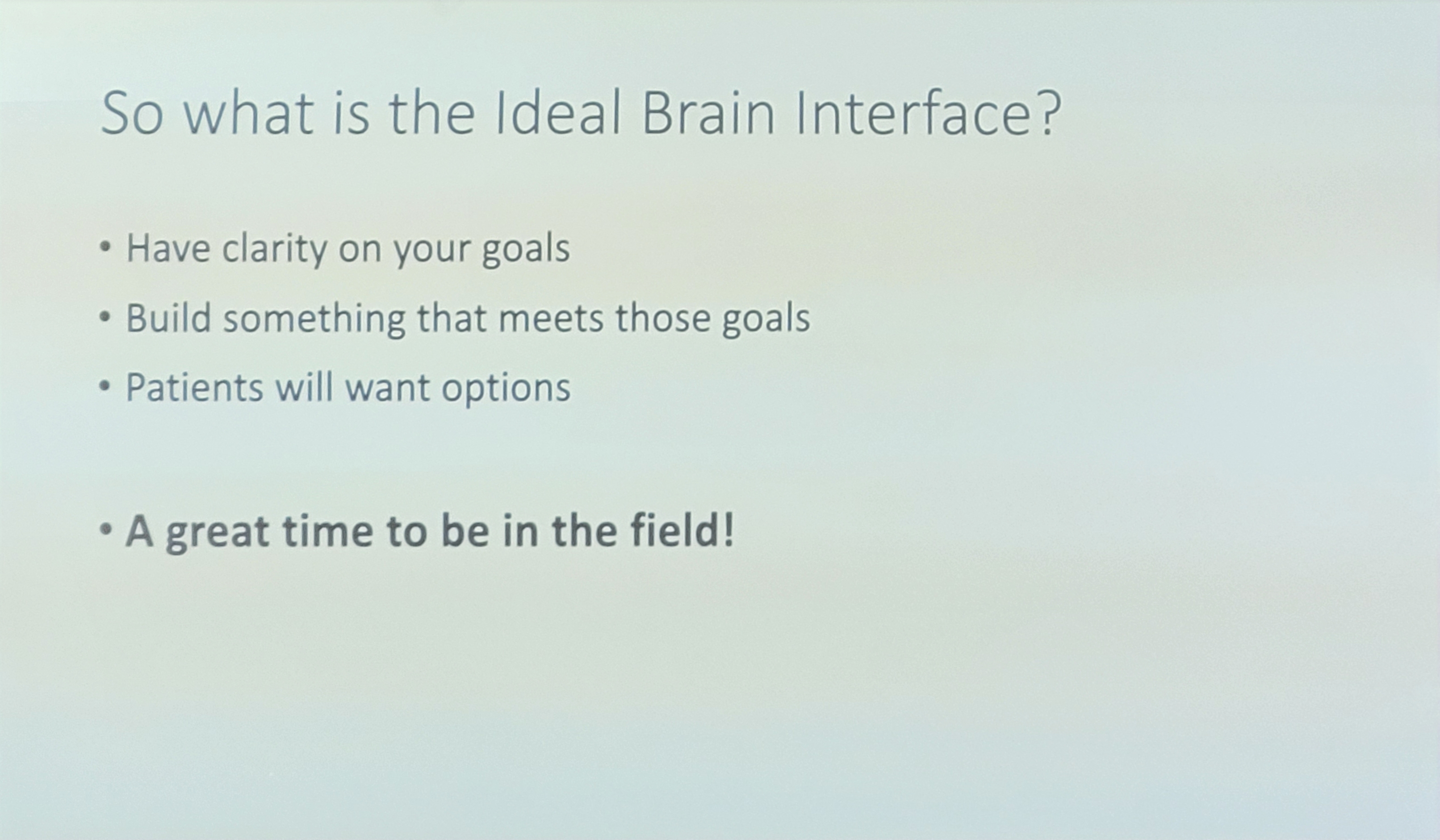
Presentation - “The Ideal Brain Interface”
Candidates for ideal interfaces:
- The matrix, super advanced, able to emulate whole experience
- Invasive, maybe not ideal
- Surface Detail / Pill Nanobots Nexus
- Do Androids Dream of Electric Sheep? - Mood picker
- The player of games - Ian M. Banks
Should our goal be to get as close to possible to scifi?
Practical constraints
- Delivery and tissue displacement
- Power
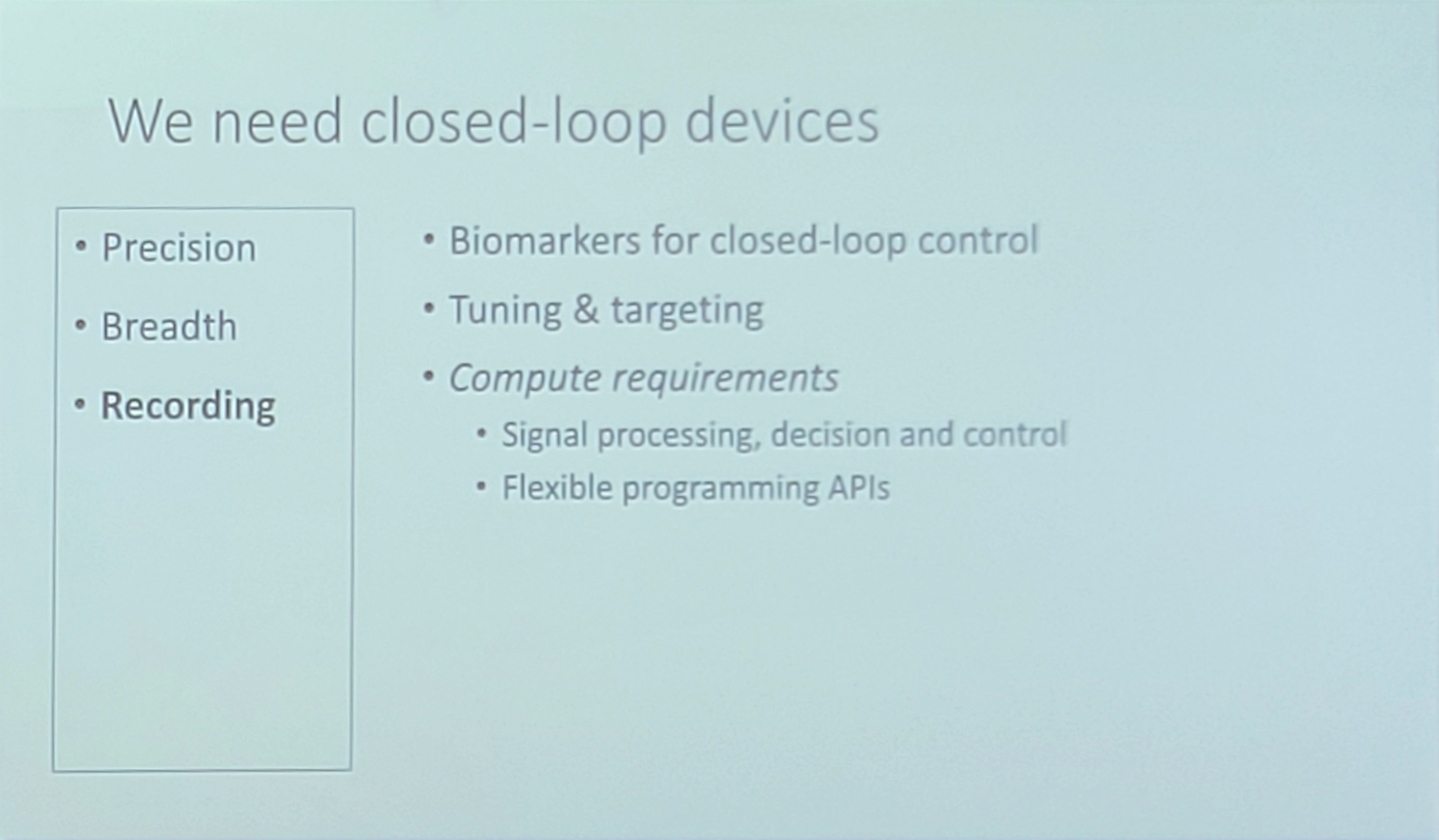
- Compute
- Data and Tuning
- People are individualistic, need to tune. Can be resource intensive (manpower too)
- Regulations
- Further advances required for further use
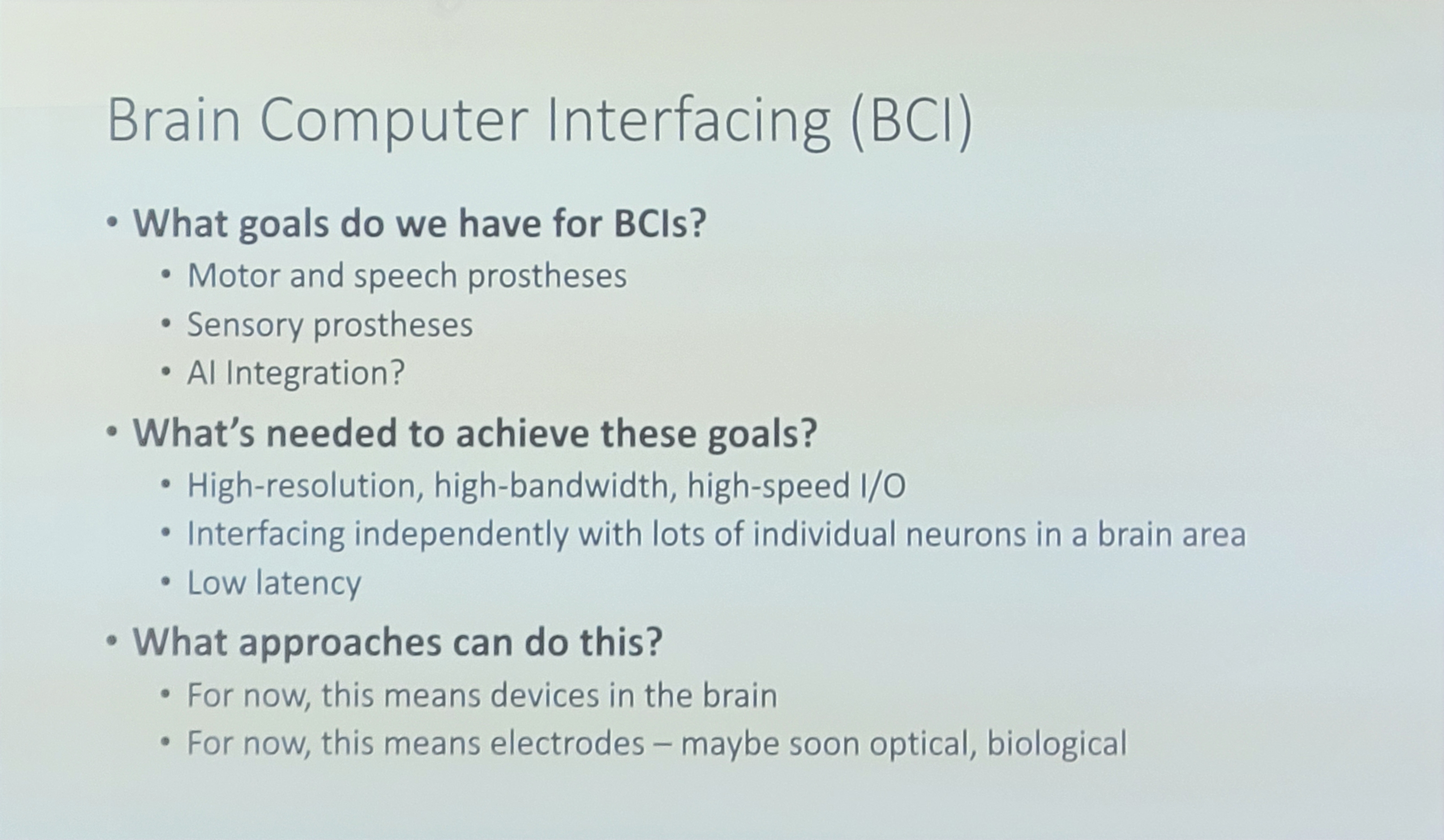
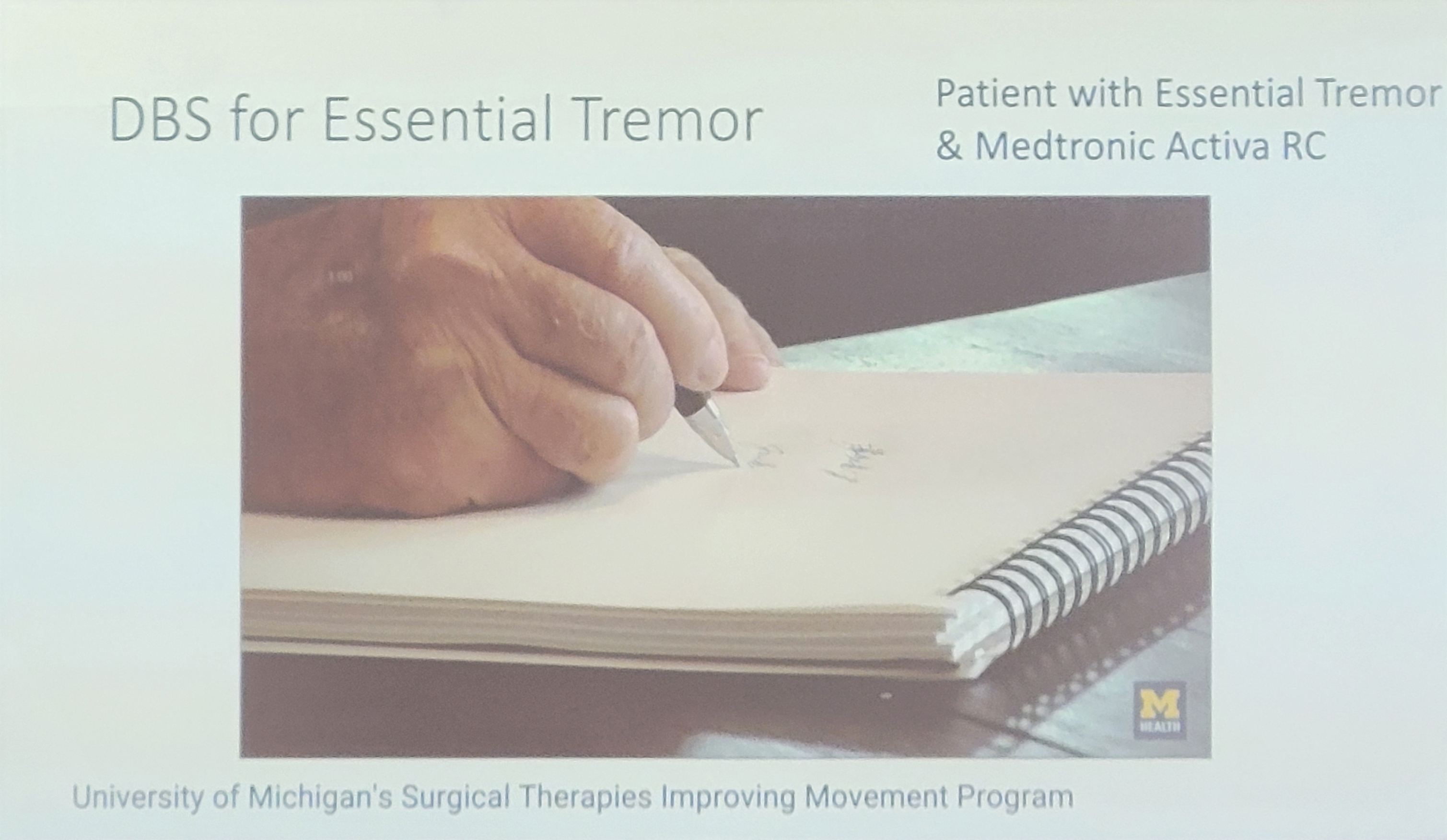
- Over 300,000 DBS in brains at the moment
- Even more with RNS for epilepsy
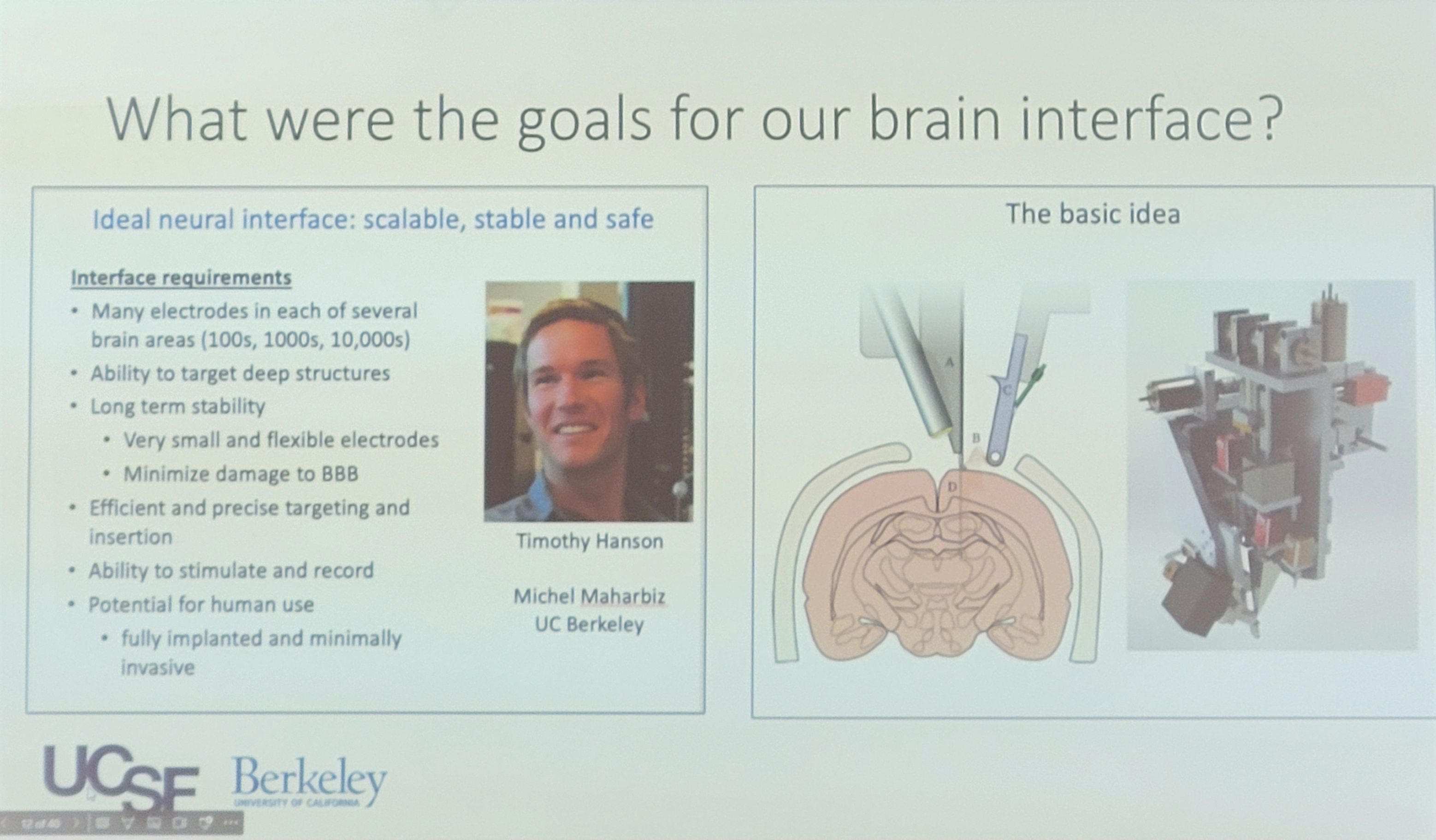
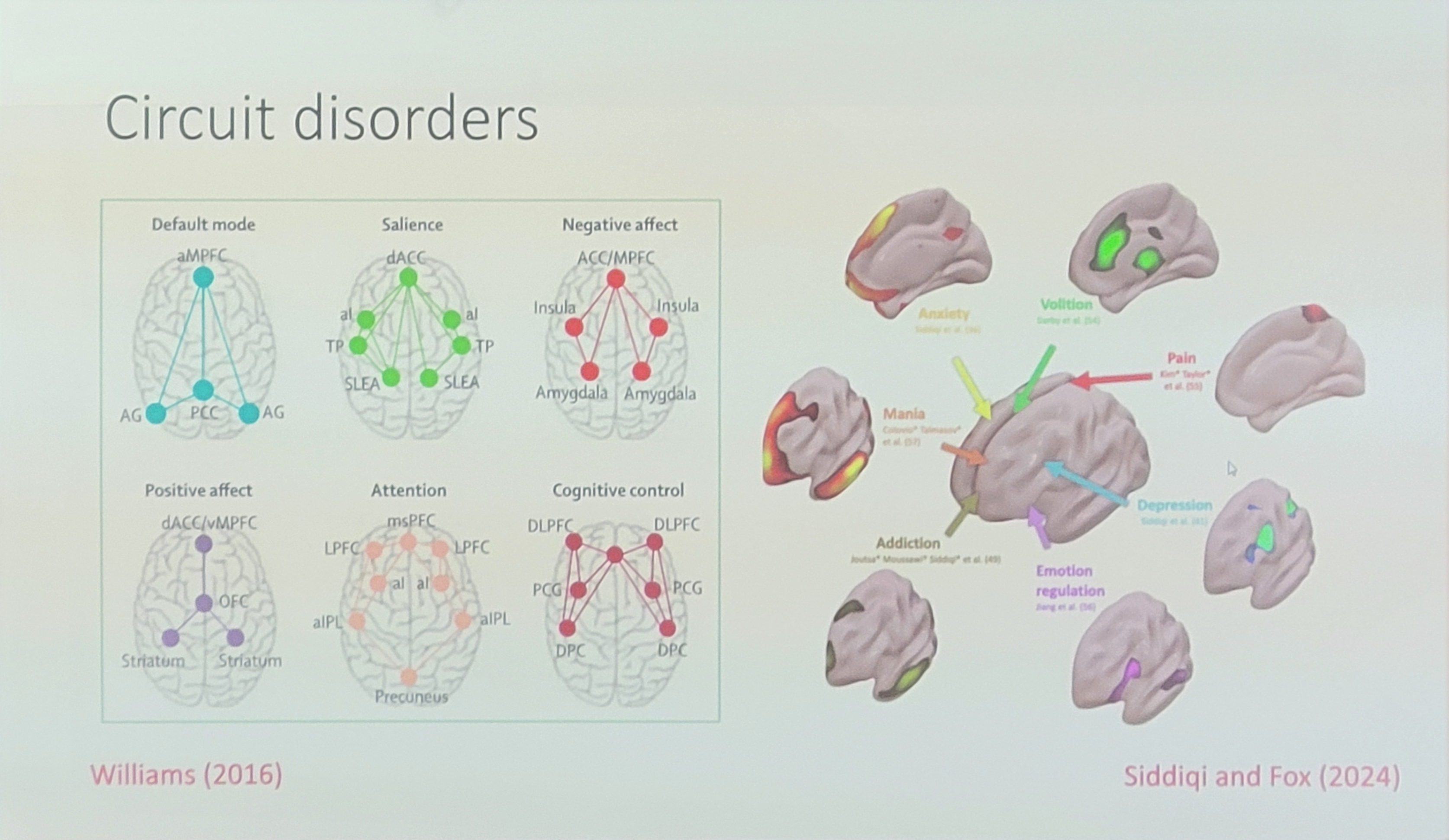
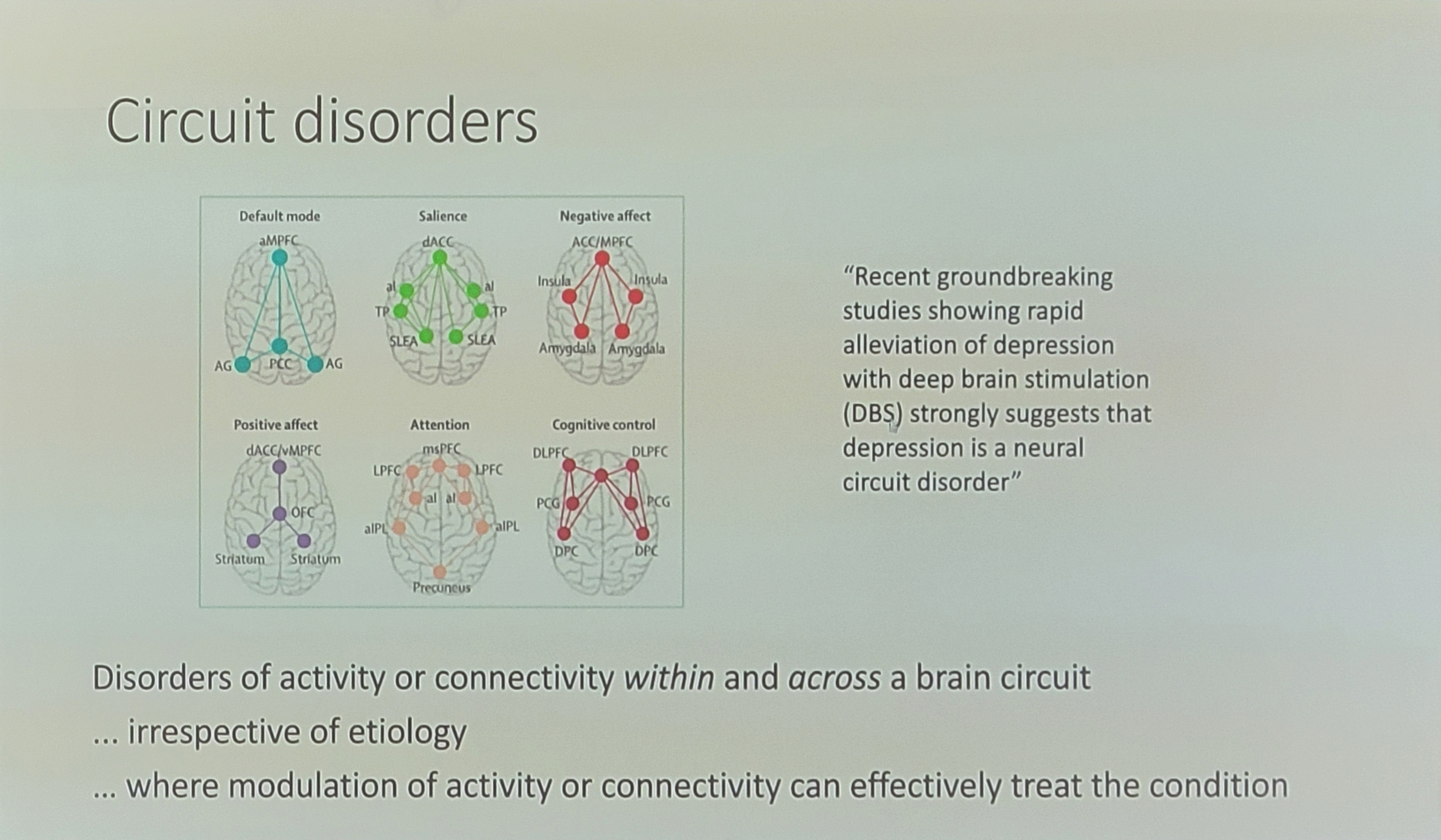
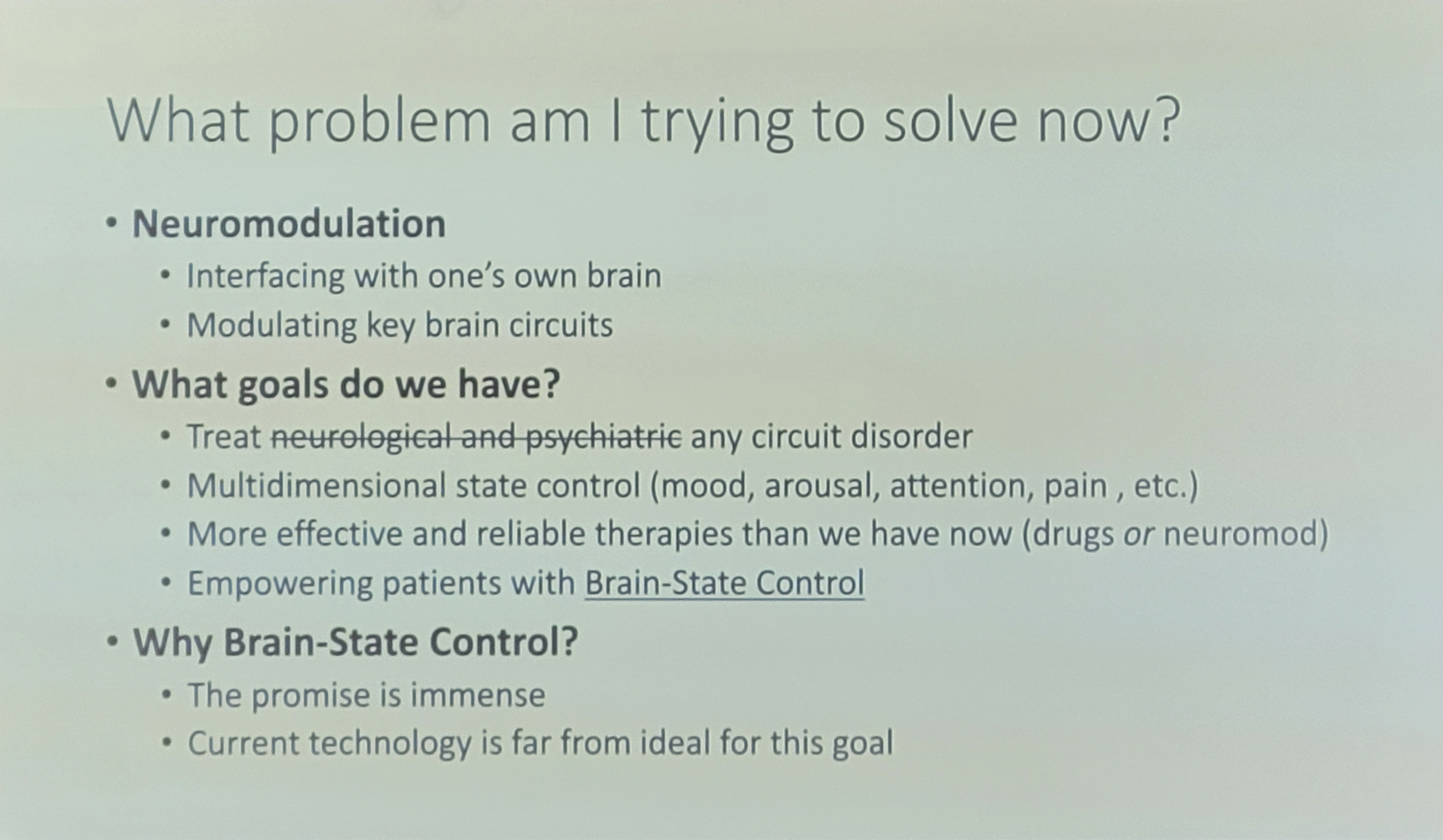
- He redefined his goal to instead be treating circuit disorders with multidimensional state control!
- Founded Integral
What’s Needed for BSC - Brain State Control?
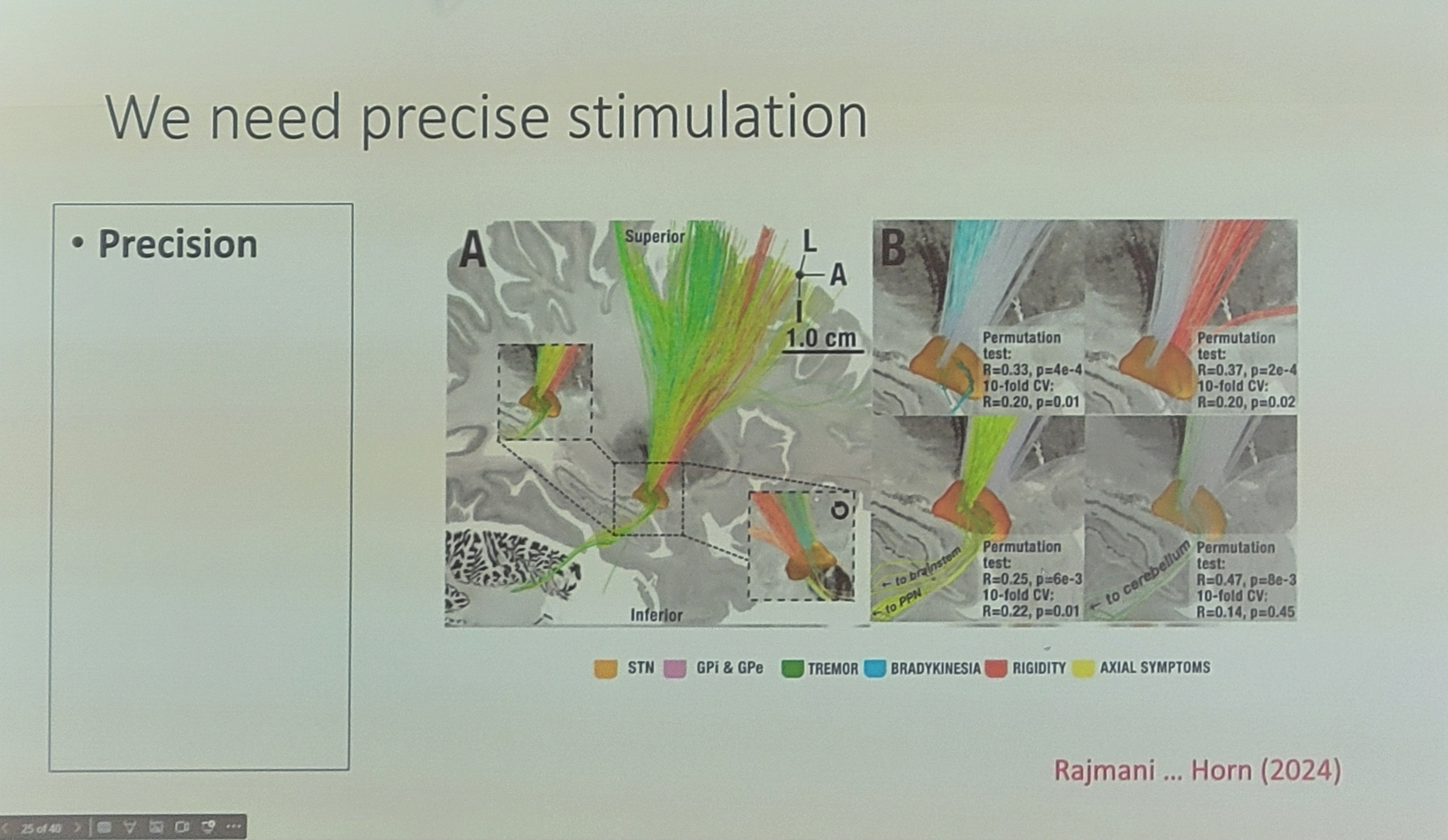
Precision
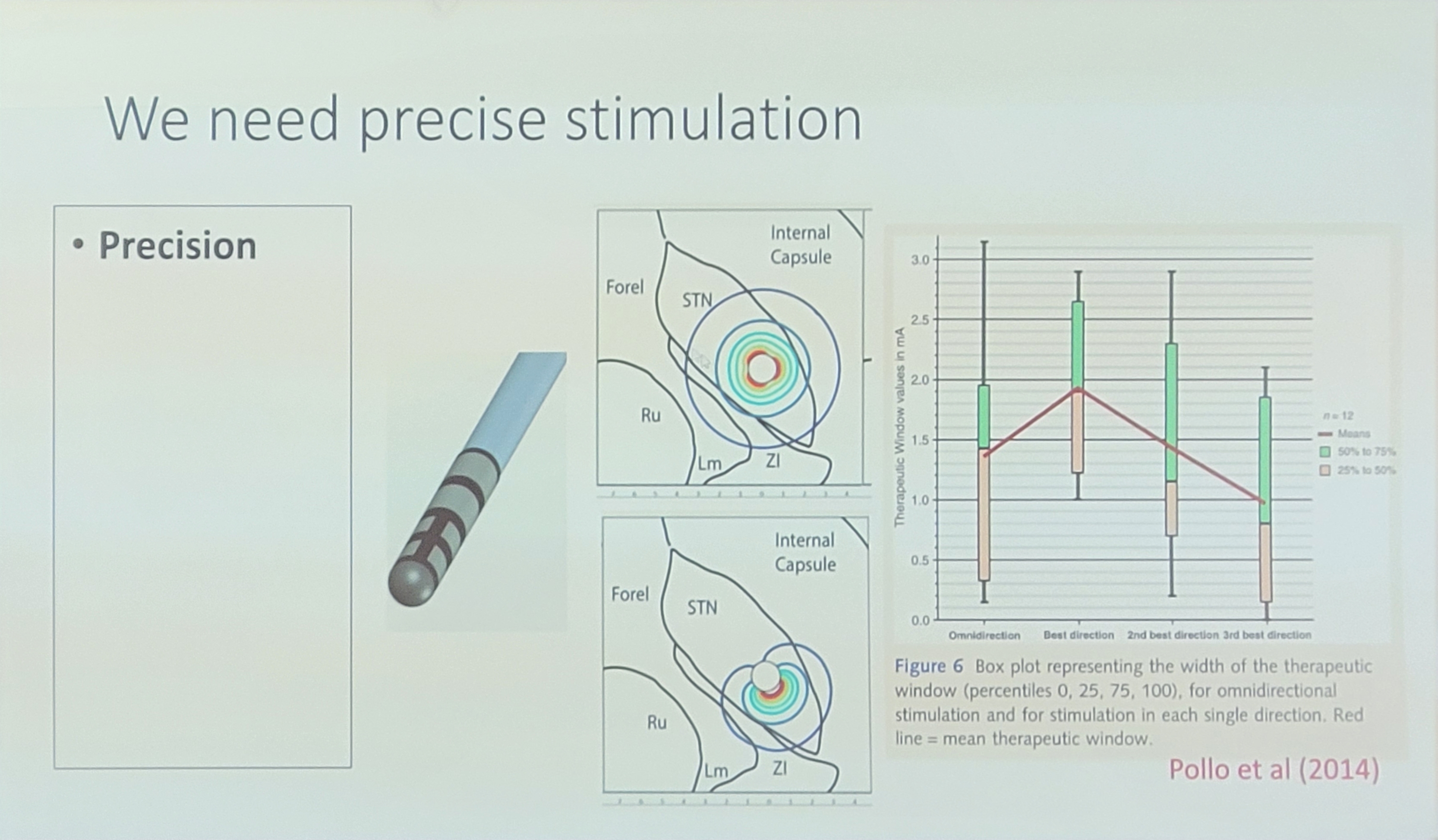
- In the past, we put leads deep in the Basal Ganglia (STN, subthalamic nucleus)
- Make sure to get STN but not the capsule, that would be painful
But maybe for modulation, we don’t need to be as precise as we thought.
- Micro vs Macro Electrodes
- Meso-scale DBS leads
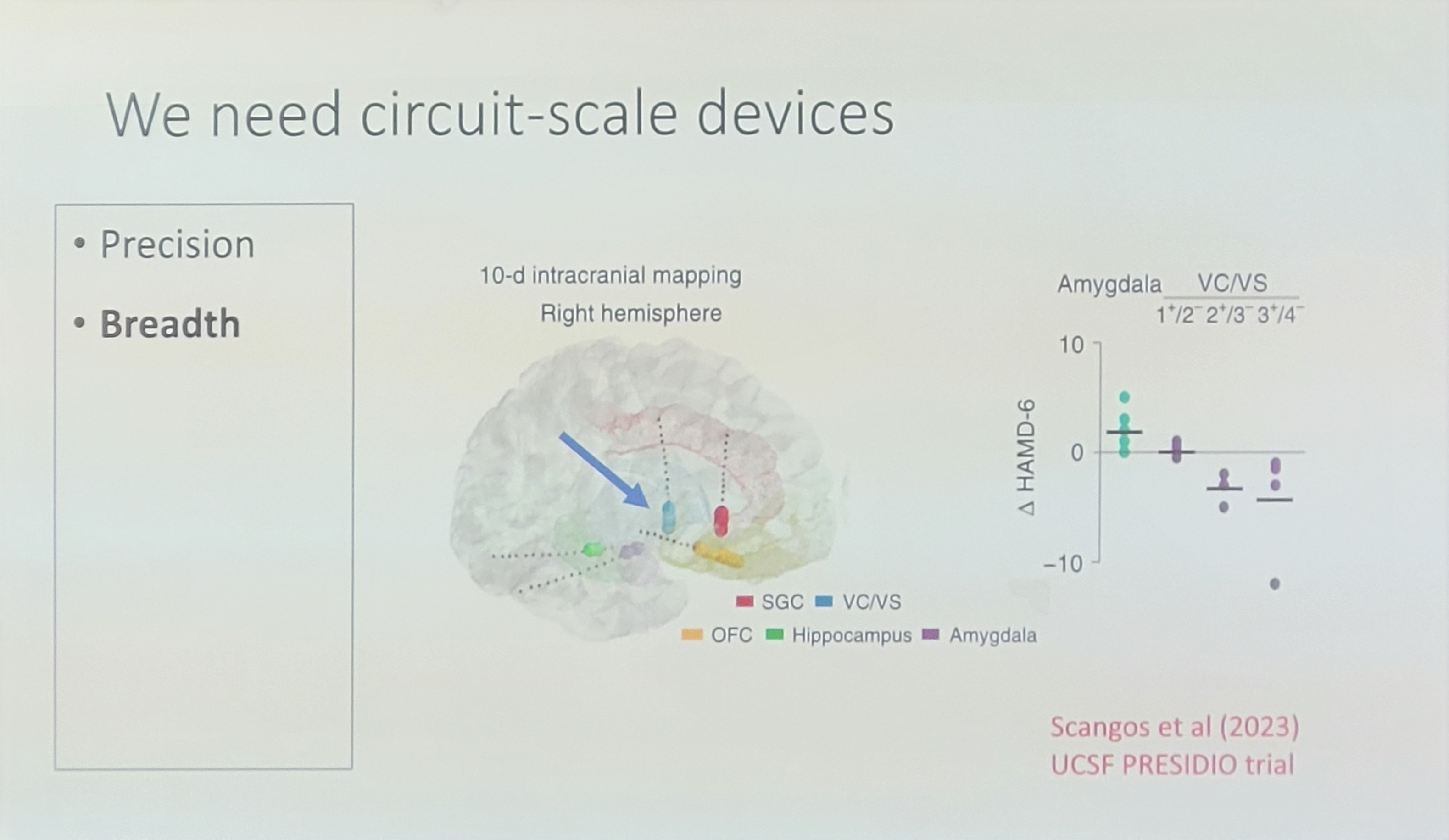
Breadth
EMU - Epilepsy Monitoring Unit
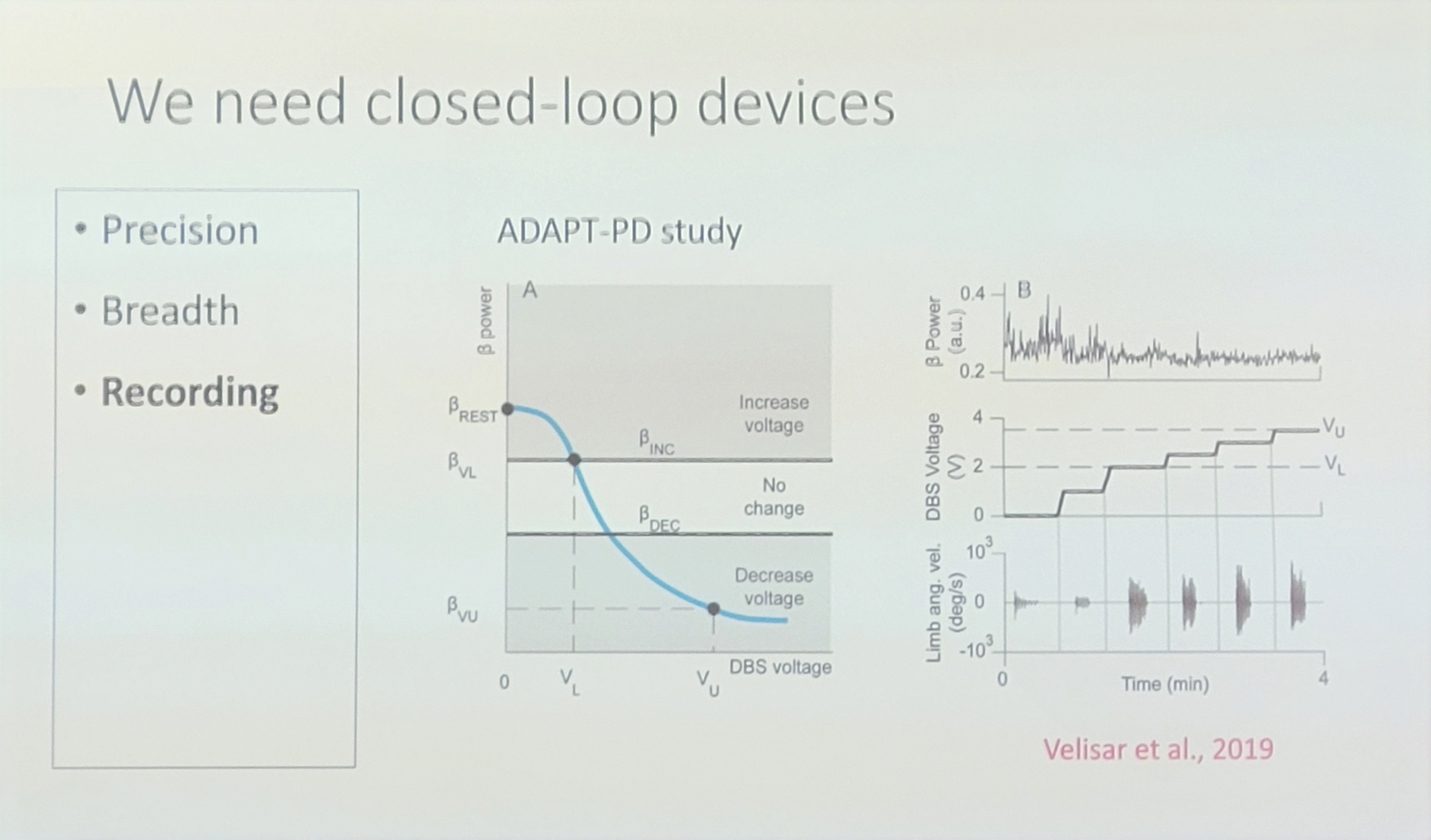
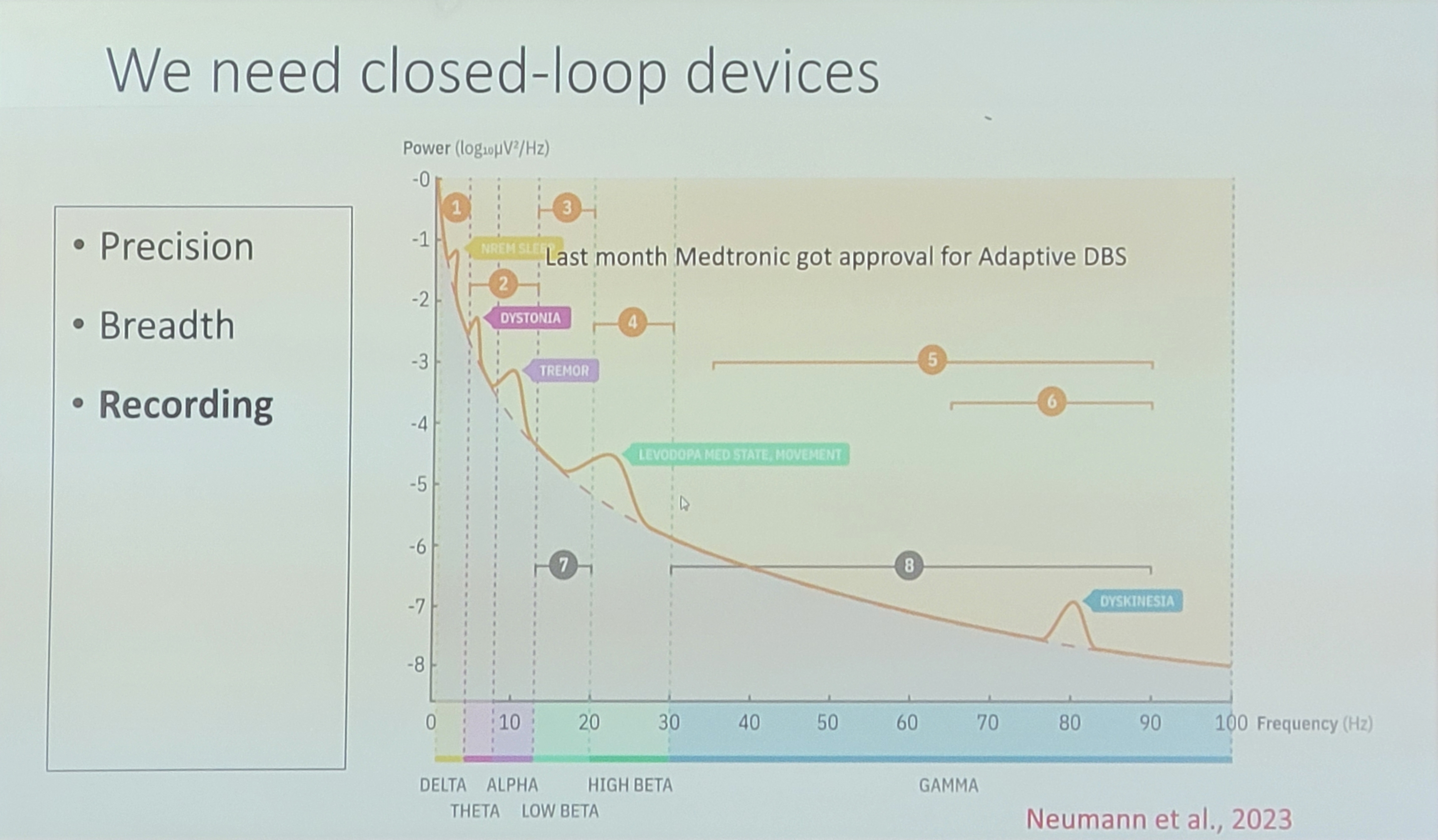
Recording
Time
- Collect as many data points as possible
- This is done best with continuous use
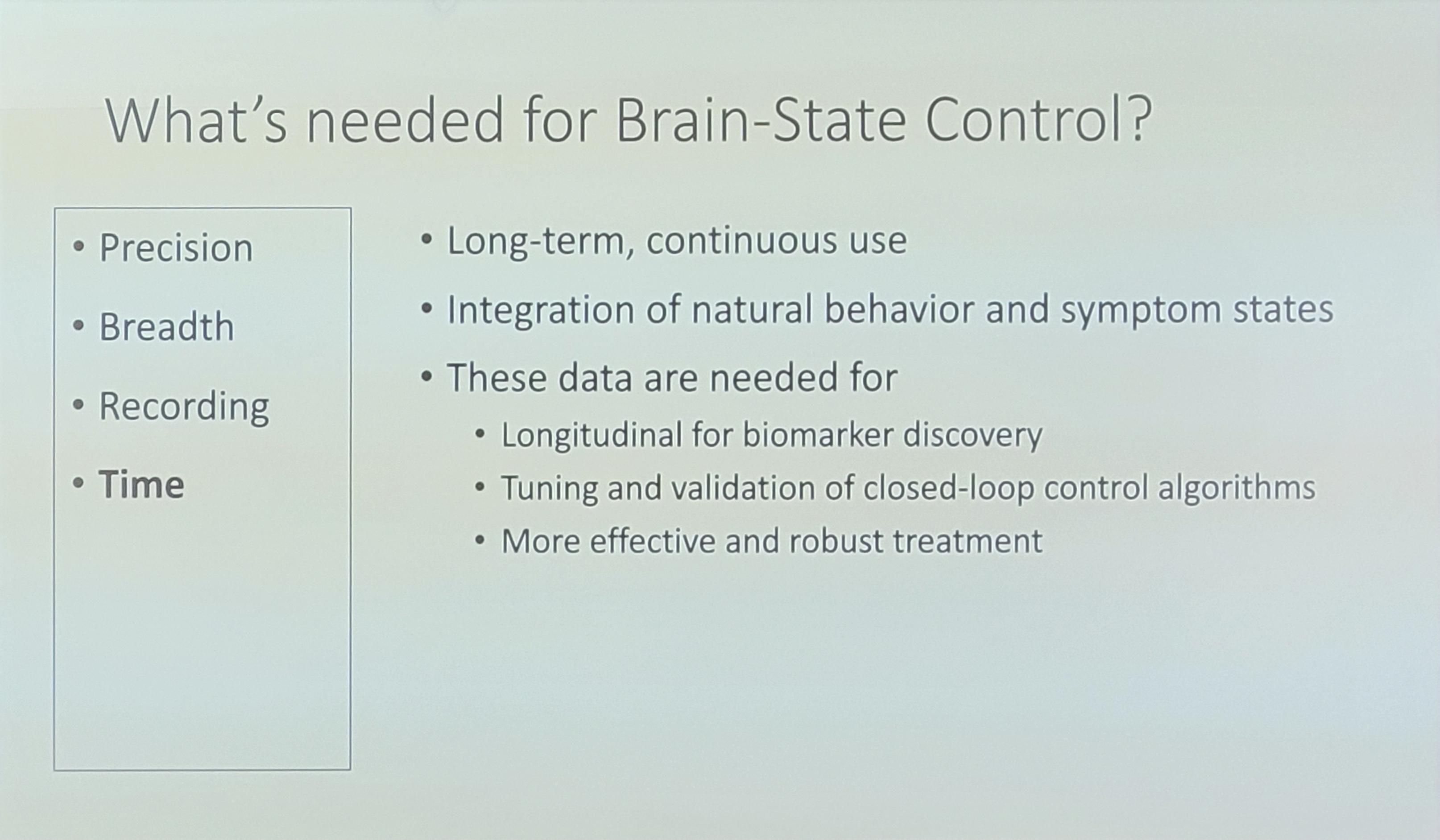
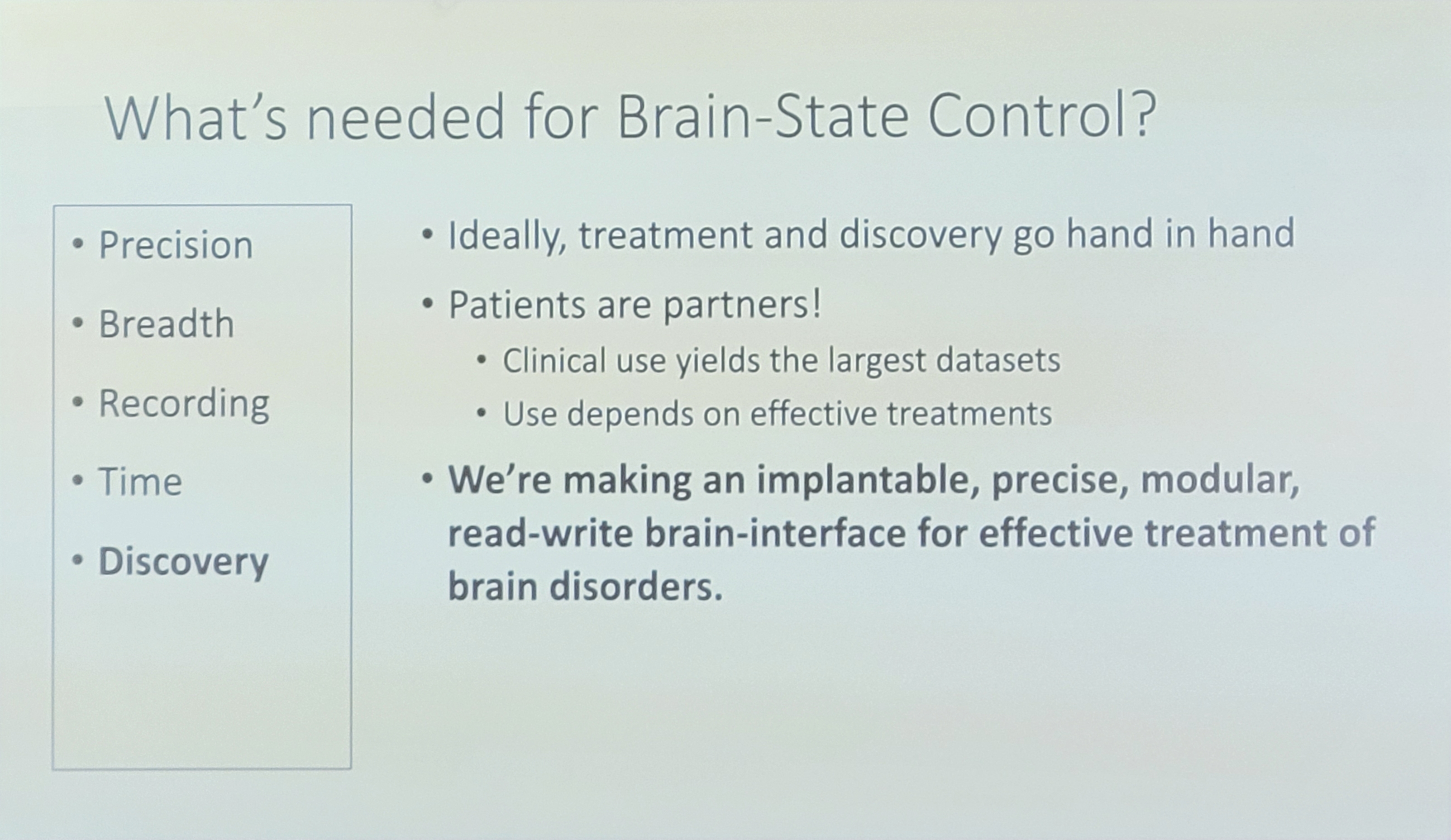
- Build a research device
- Record, discover, and treat
Brain Surface Interfaces - Motif and Precision both have interesting and advanced recording devices
- Neuralink not the only option
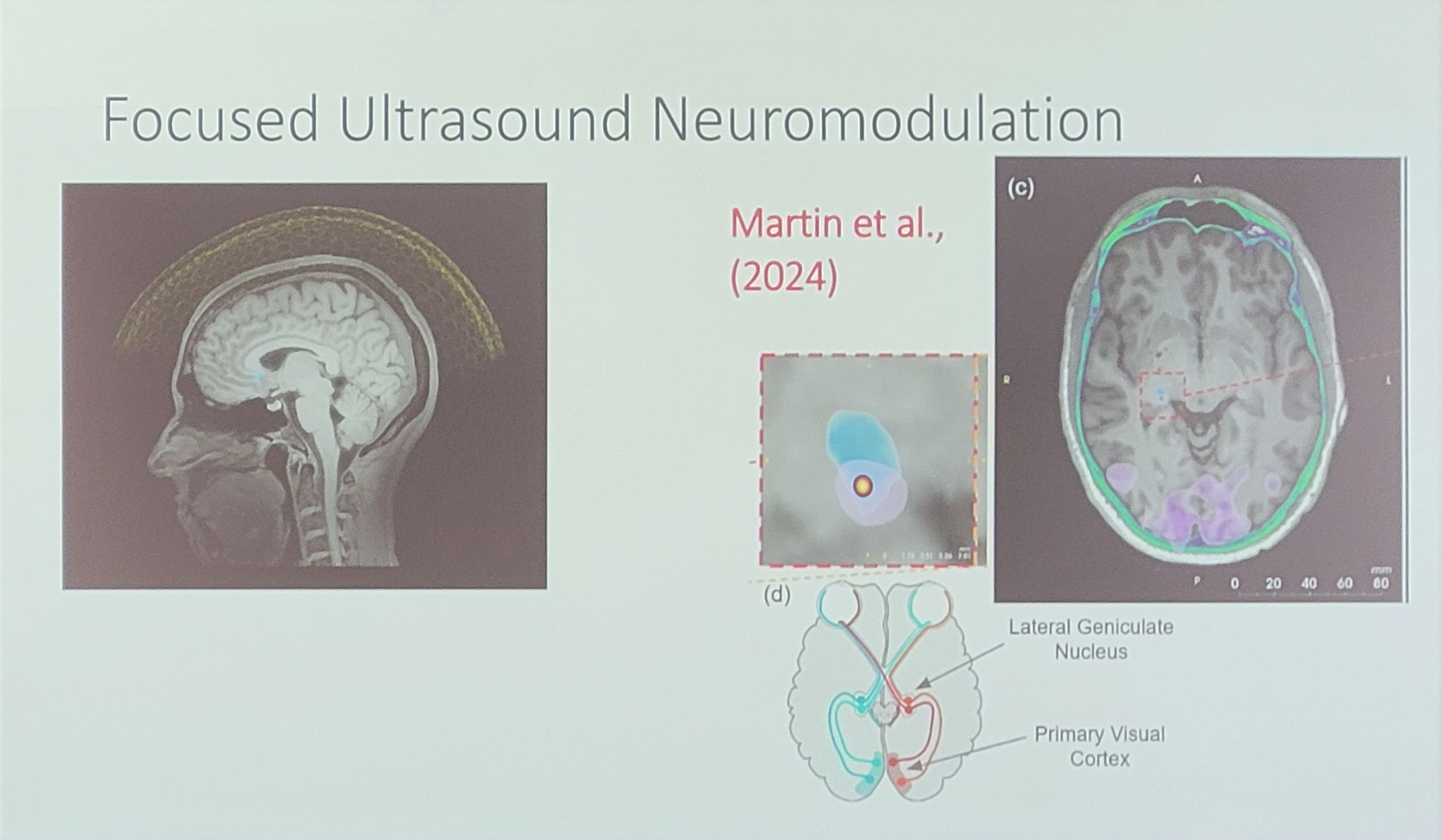
- Nudge built a device to do this on
MR(illegible)
Forest Neurotech: - IMplemented TMS
Q&A
How do you quantify / validate parameters (PIE)
Break a lot of hardware, R&D, just don’t break inside people
Need PHD?
Not required, required is capability, bring something to the table
- Postdocs: Do everything
- Industry: Do something
Postdocs forced to become more capable, PHDs are useful for getting technical depth
To make this decision, ask yourself:
- What do I want?
- How do I get there?
- Who/what/how to learn, who to do with
Stim depression neural circuits, how effective can it be without understanding cause
No such thing as a real circuit, first used with Parkinson’s. This example especially, was absolutely not a “neural circuit disorder” by the intuitive definition, but can be treated with circuits. Thus, by the circular definition of circuits it is a neural circuit disorder.
However, despite that, neuromodulation slows disease.
In some ways, chicken and egg. No known origin, and don’t understand circuits.
he arguse that you continue by treating and continue attempting to solve.
Collect data to push boundaries.
You can progress with no understanding, and hopefully the progress lends itself to understanding.
How to determine networks?
Not sure, still a WIP.
Even he is still waiting for data to come in to be sure
There are hints though:
- Lesion studies
- PET/fMRI
- Multimodal datasets with neuroimaging reconstruction
- Harvard - Amhard / michael fox
- Rodent work
- He says that people who don’t work in rodents wish they worked in rodents
Circuits relationships with symptoms
- He says that people who don’t work in rodents wish they worked in rodents
BCI Competition
UCLA
Wheelchair modifications, motor controlled, color P300 for stop/go/turning
Demoed the wheelchair moving with a plush bear in the seat.
UCSD
EMG bracelet around arm used to control hand expression in robot arm.
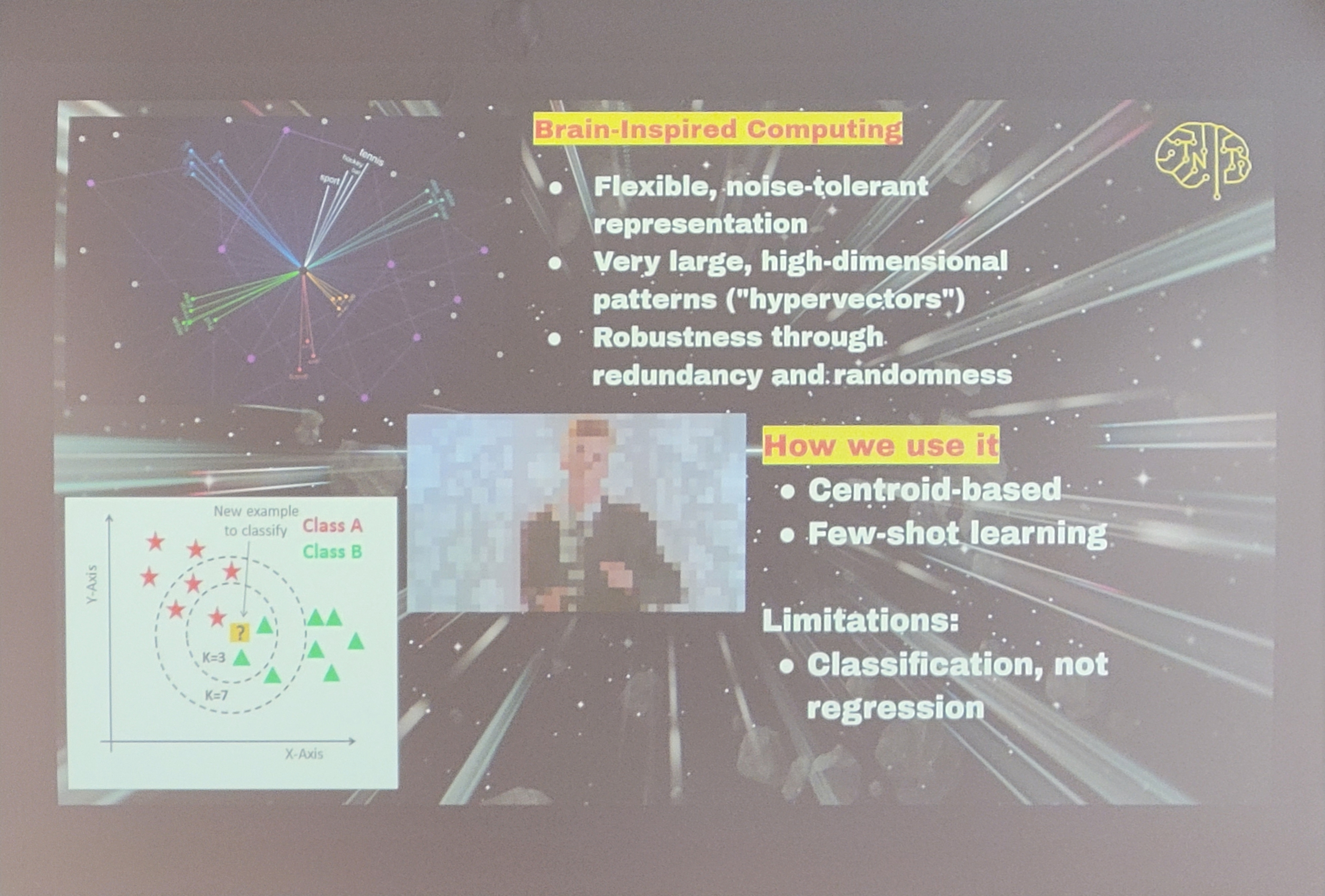
Hyper-Dimensional Computing training quickly, 1 minute for 5 classes, 30 seconds for 4.
Very impressive demo, trained a model to respond from scratch, and showed it live in front of audience, making it do the triton, fist, relax, L (for love), and one more.
USC
Tried to make a breathalyzer test for tiredness.
Got decent results, had a almost unified increasing trend in recorded participants (no matter what rating they got, the rating went up when they did a grueling task)
Demoed with a deployed app, got 0% tiredness for both participants.
Davis
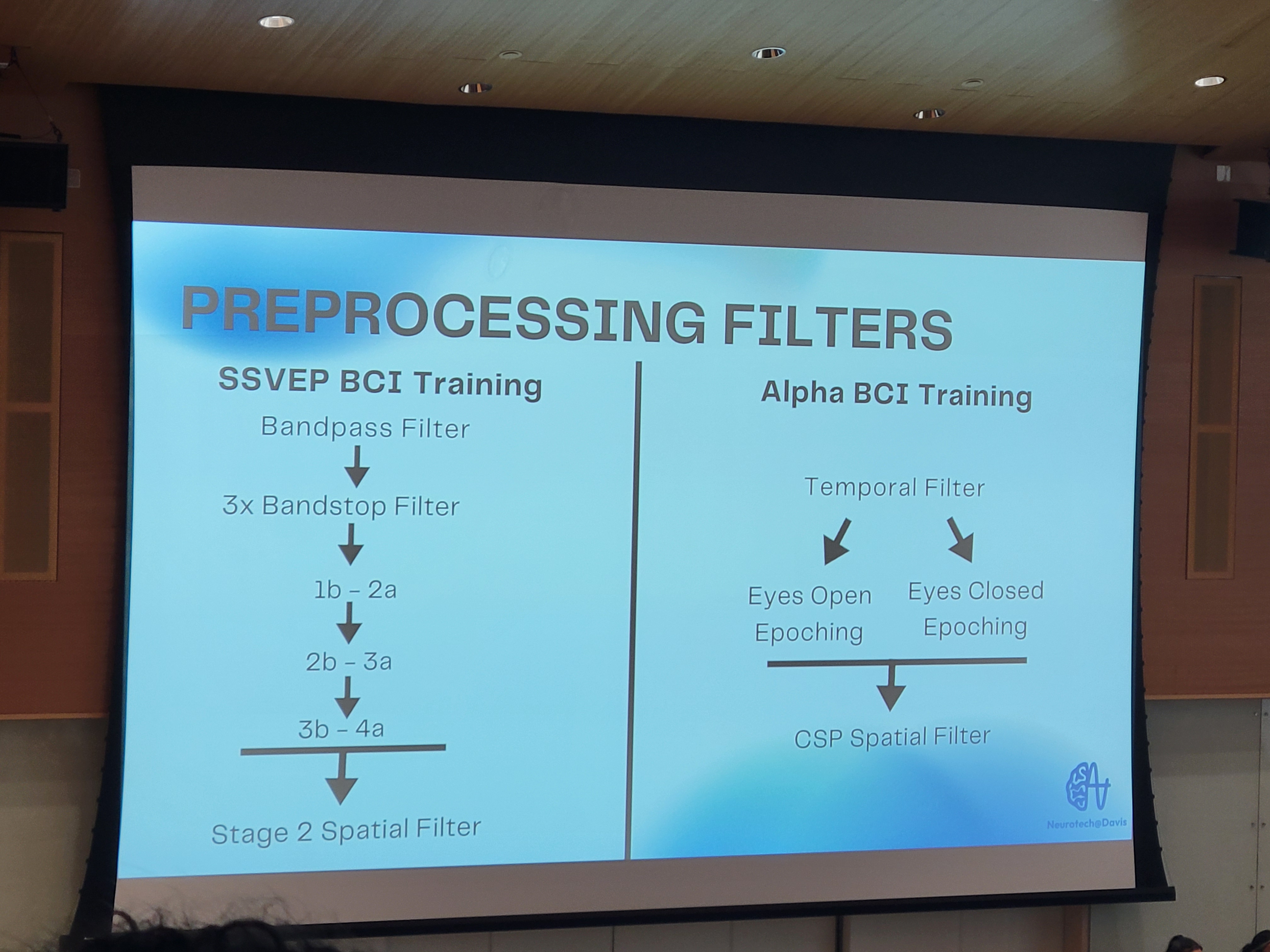
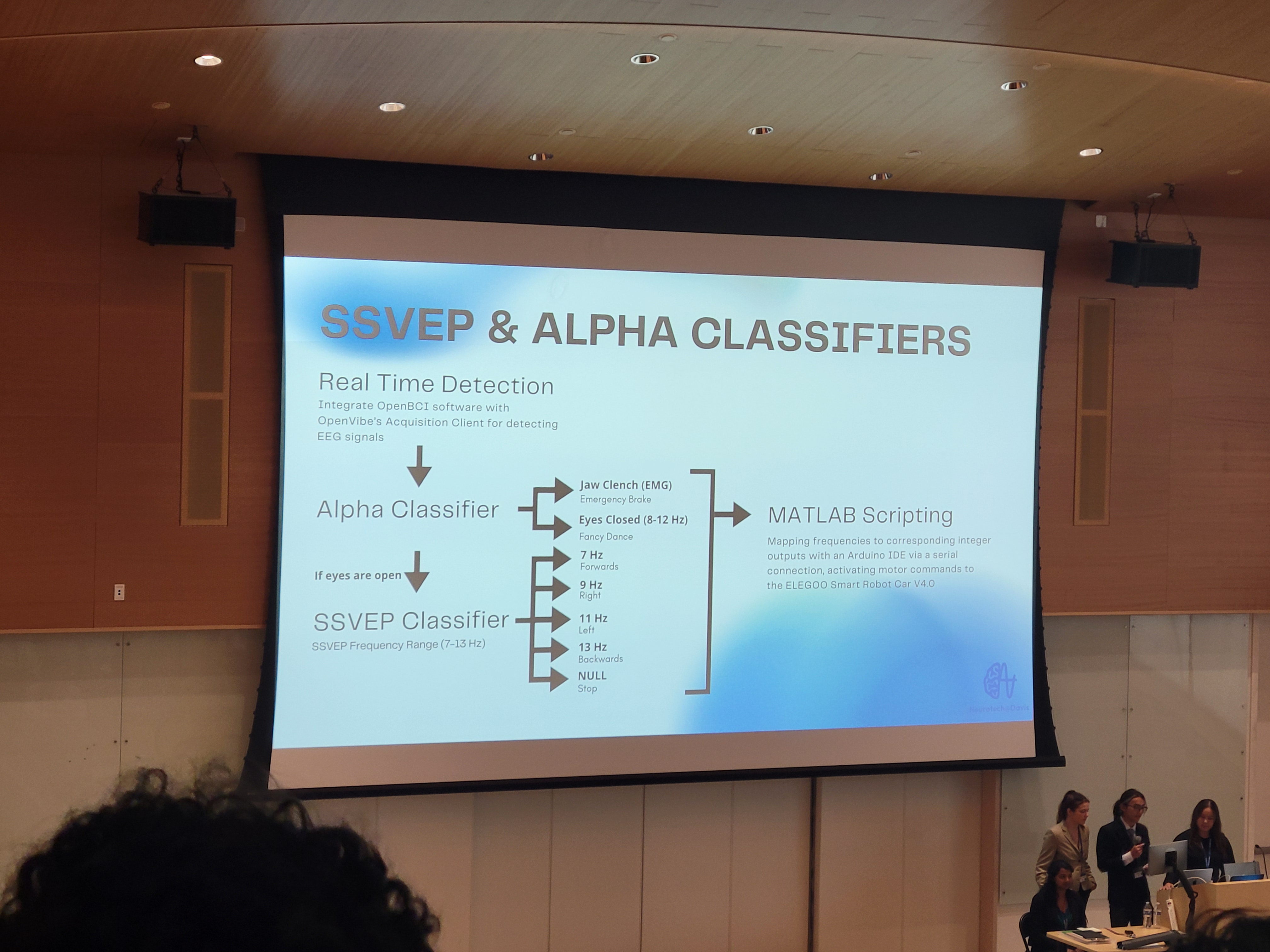
EEG controlled robot car, multiple phases of ML inference.
CAL
Dr. Octopus, ground up project to build a third arm to augment human capabilities.
Custom PCB EEG board, experimenting with arm designs to handle weight, and haptic vest.
Demoed the haptic vest tied to arm angle.
For feature validation?
- Nested cross validation procedure
- Recursive feature elimination
Platt scaling algorithm
fNIRS
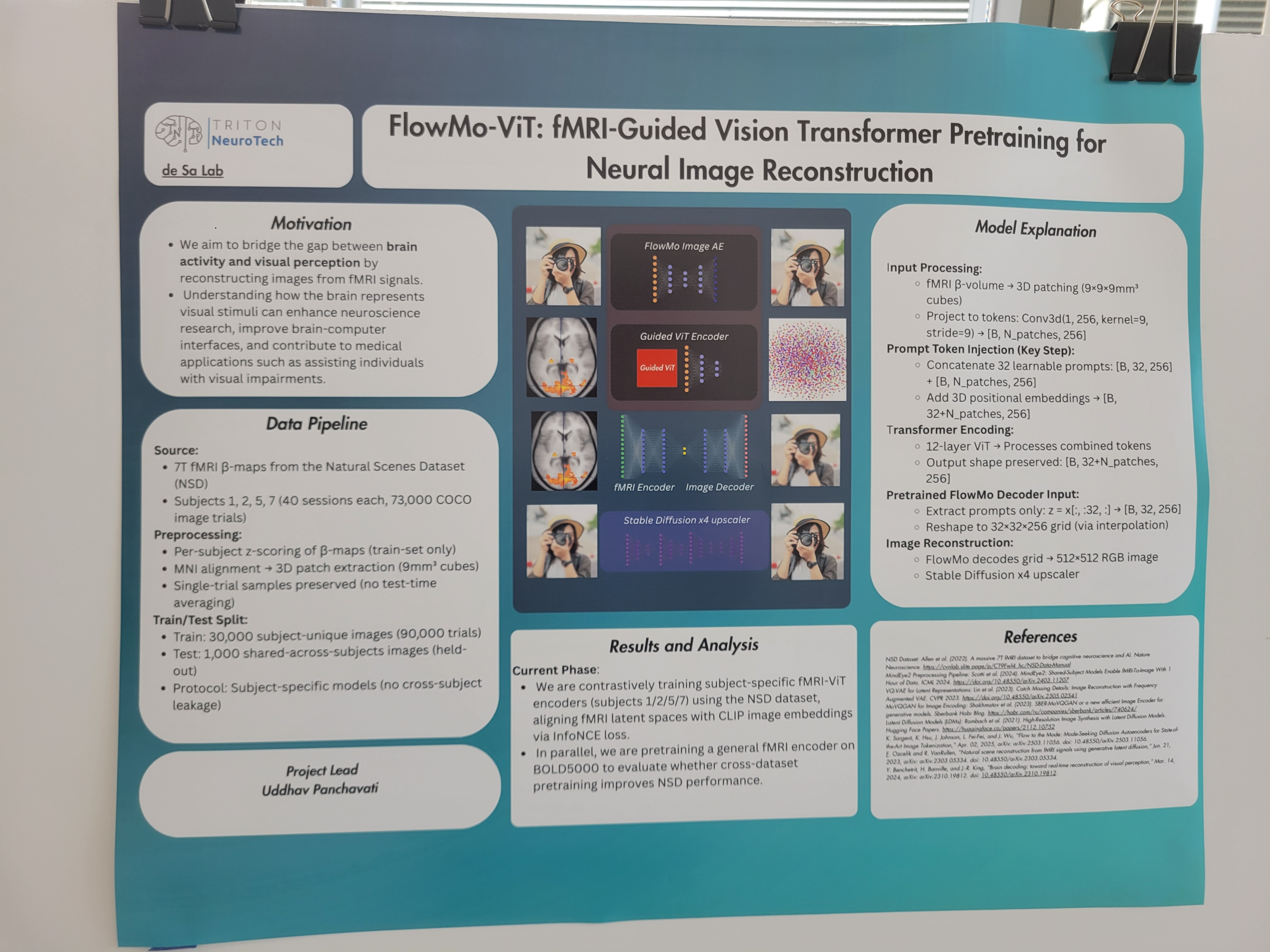
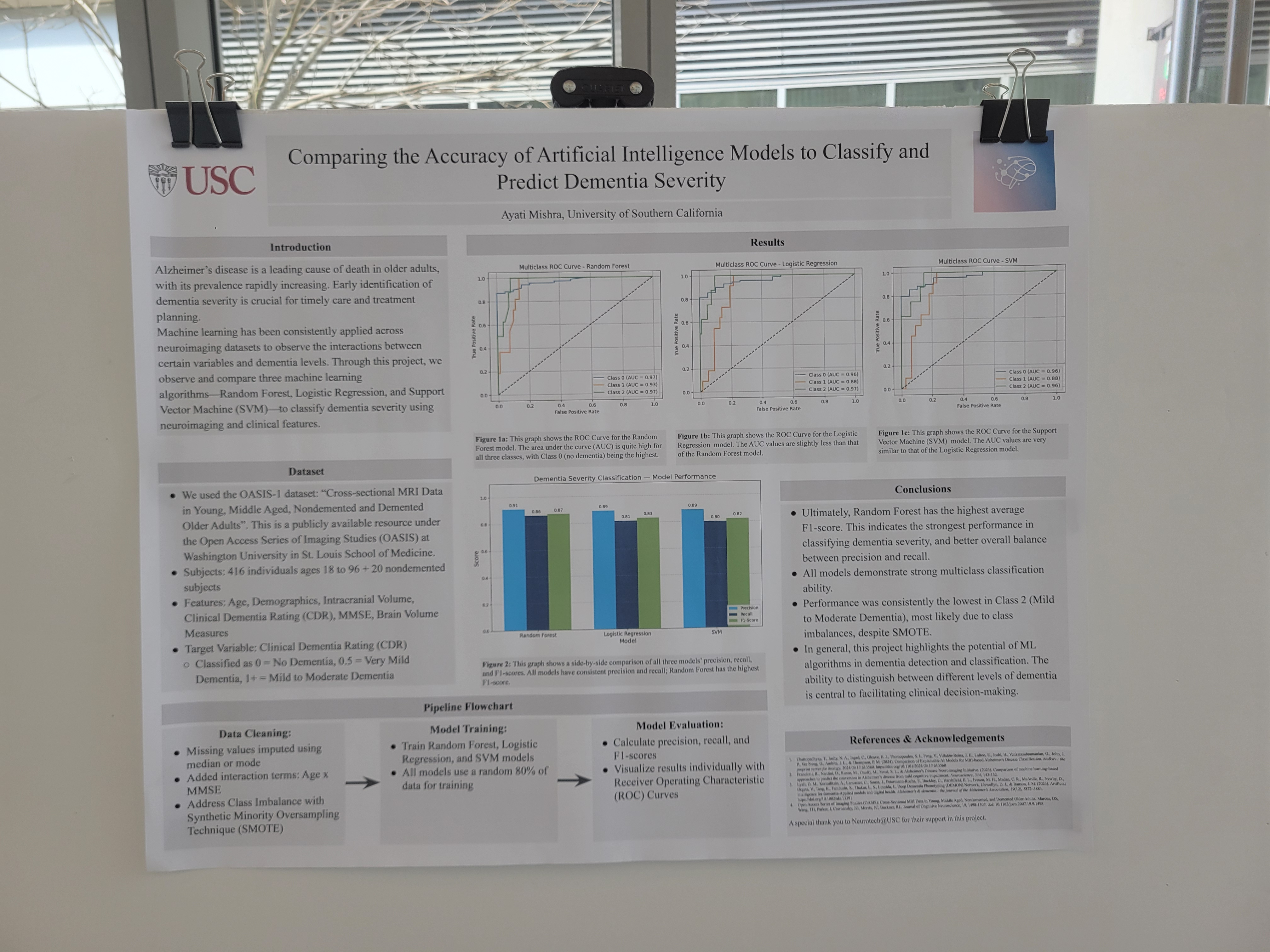
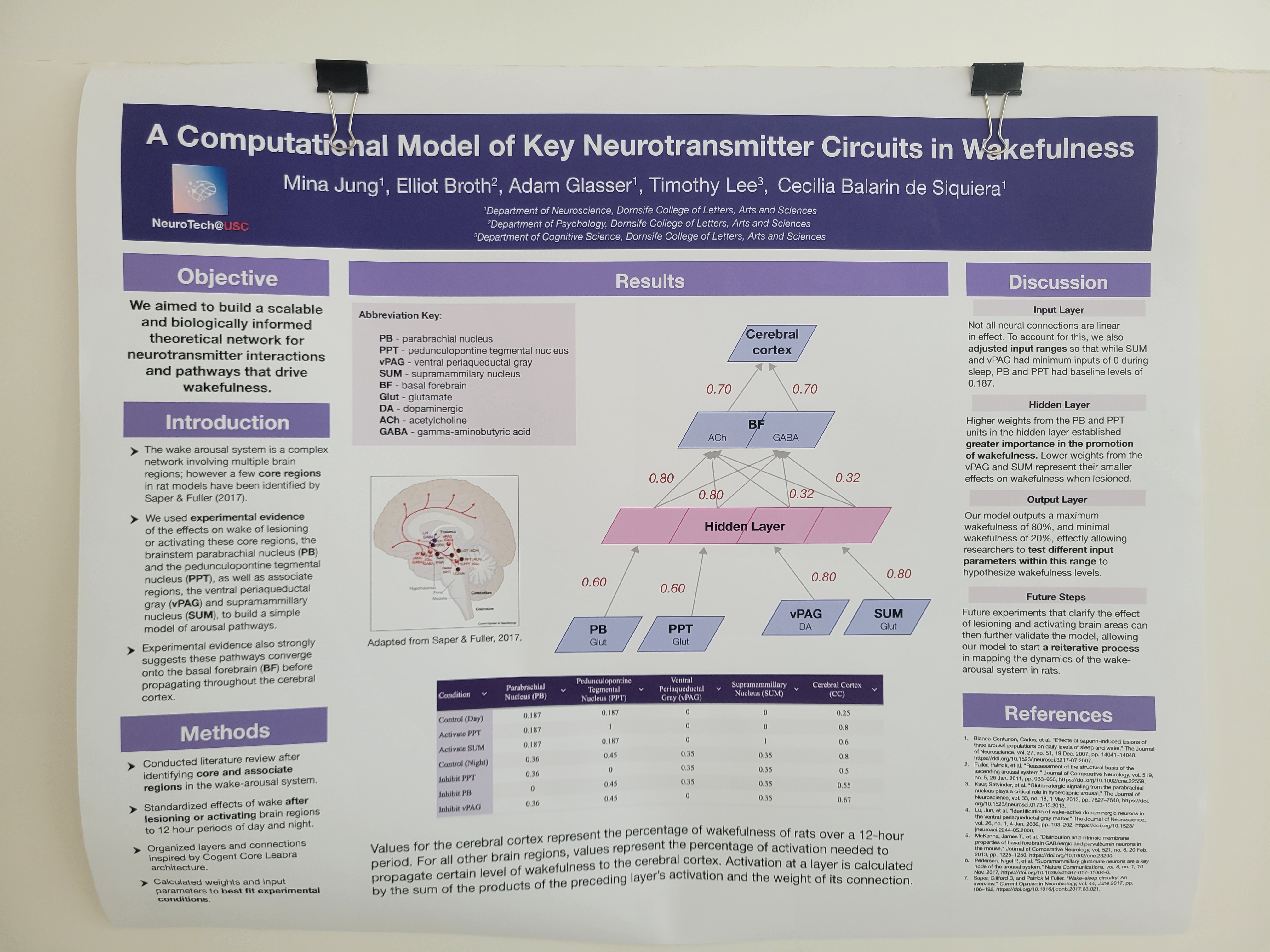
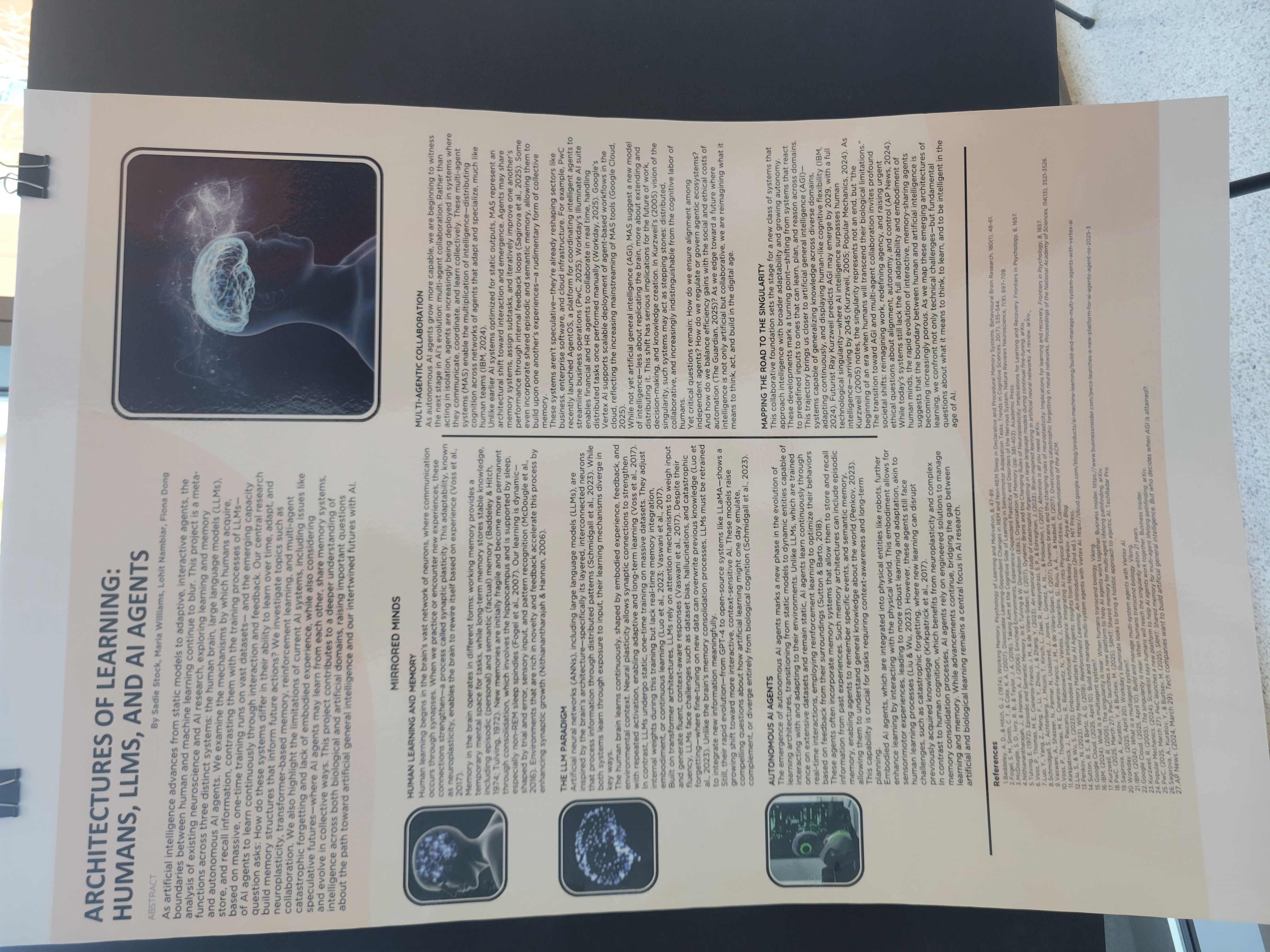
Posters
🧪 -> Refresh the Info
Did you generally find the overall content understandable or compelling or relevant or not, and why, or which aspects of the reading were most novel or challenging for you and which aspects were most familiar or straightforward?)
Did a specific aspect of the reading raise questions for you or relate to other ideas and findings you’ve encountered, or are there other related issues you wish had been covered?)
🔗 -> Links
Resources
- Put useful links here