Dataview
LIST
FROM #Collection
WHERE file.name = this.Entry-For
Insert entry name
🎤 Vocab
❗ Information
Tuned in 15 mins late
✒️ -> Scratch Notes
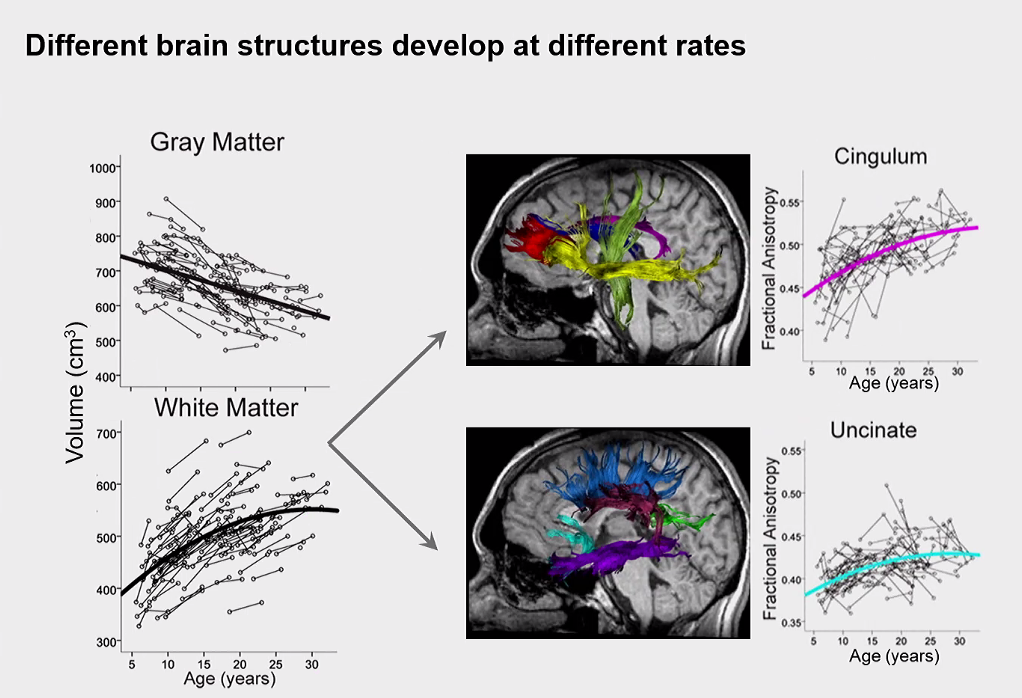
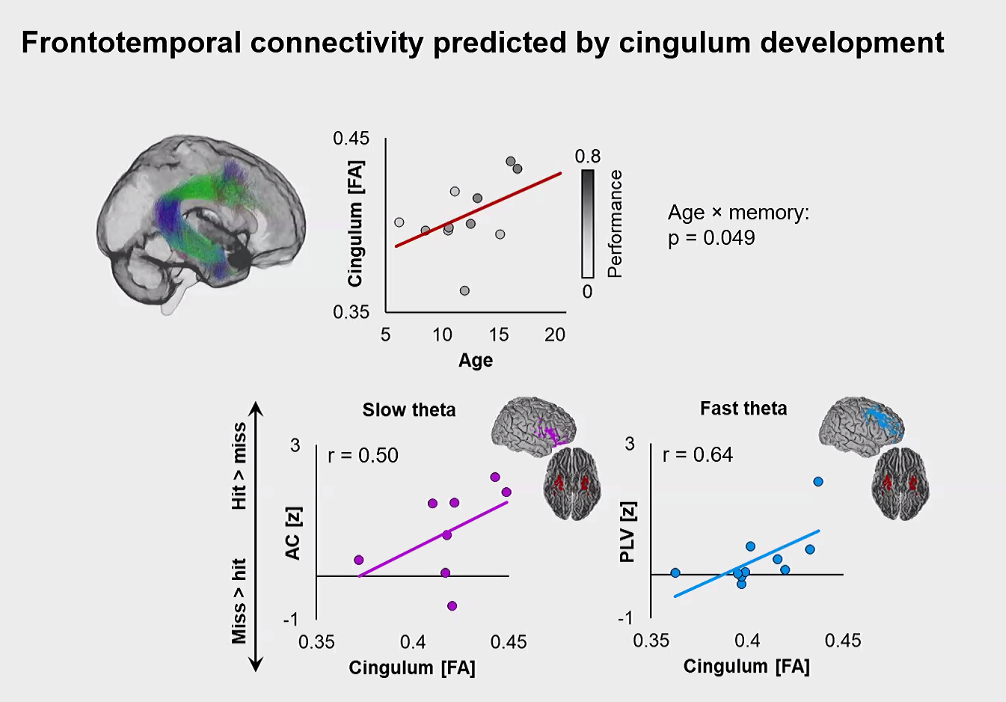
DTI Scans:
- Strength of the cingulum tract alone predicted
- Performance on memory task? p=0.049
- Strength of both connectivity mechanisms
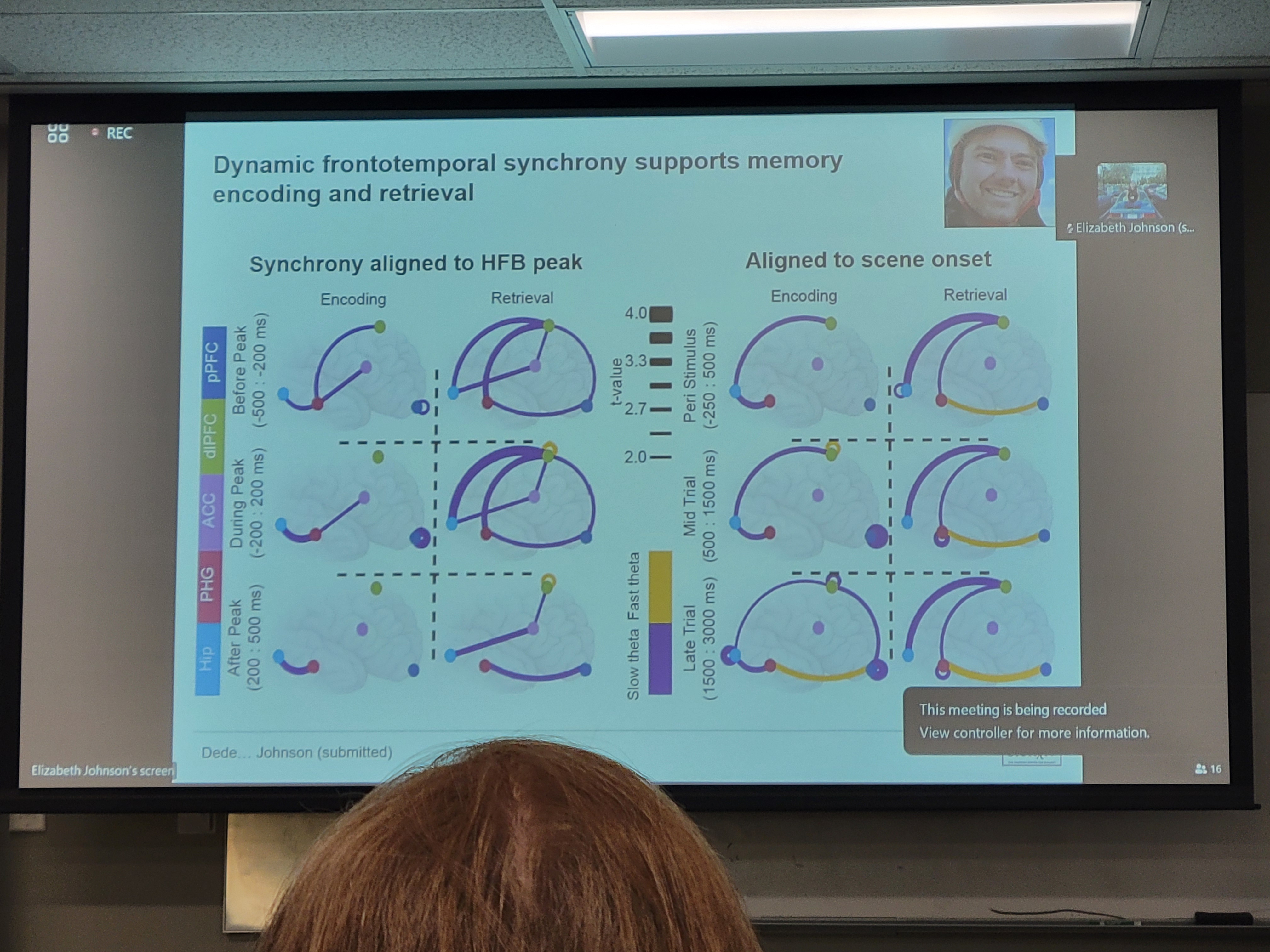
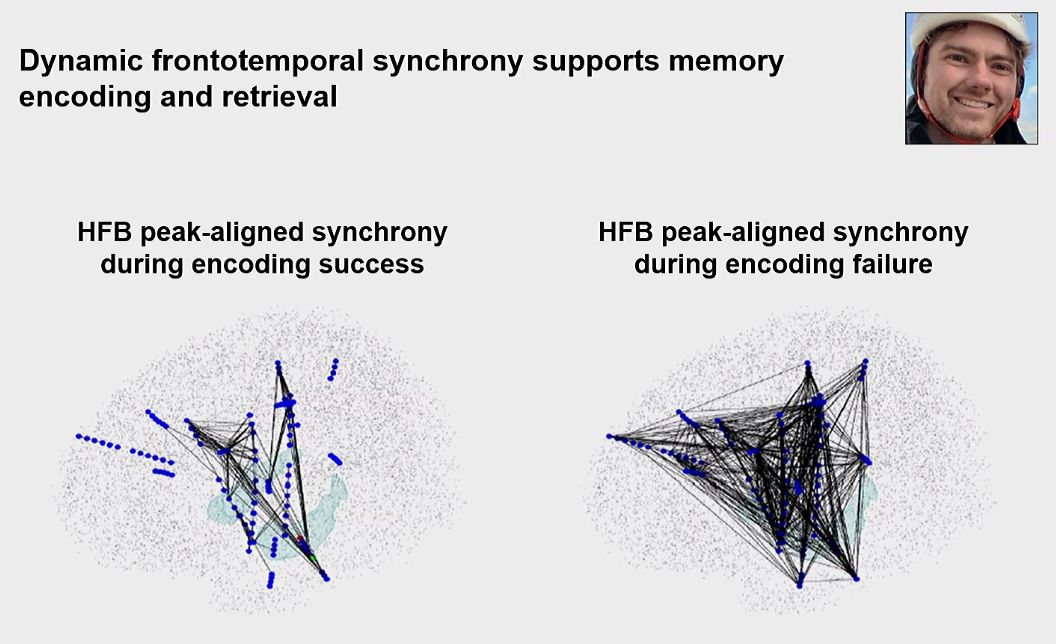
- From one representative patient
- More connections not always better, challenging dominant theory
Work done on variability in slow and fast theta rhythms across age and development
Aperiodic slopes are flattest in young adulthood in both association and sensorimotor cortices (p=0.002)
“Protracted development of executive function and thinking behavior”
- Goldilocks phenomenon
Q&A
“The network connectivity data, does it suggest that the rhythms are involved in different networks, do they encode different aspects, or something else?”
- This was mostly collecting data, so good question to ask why
- Rhythms help to coordinate interregional interactions, in this case involved in memory
- She thinks its related to brains ability to multitask and coordinate
- What multitasking? She doesn’t know
- Literature out on what any given rhythm is doing
- Current knowledge is built on association more than anything
- The speed of rhythms might also be important, she floats the idea of how many gammas fitting in a theta could be impactful
“Functional significance between fast and slow theta. Elaborate on the idea of multitasking, level of task or something else? Differences between fast and slow theta, ”
- Multitasking mostly meant in neurophisiology way, not task related way. One connectivity method is phase synchrony, and this is shown to literally put two regions in synch. Doesnt ensure that information transmitted, but if in synch they can be.
- In theta, not phase synchrony but amplitude synchony? More a coactivation than synchrony.
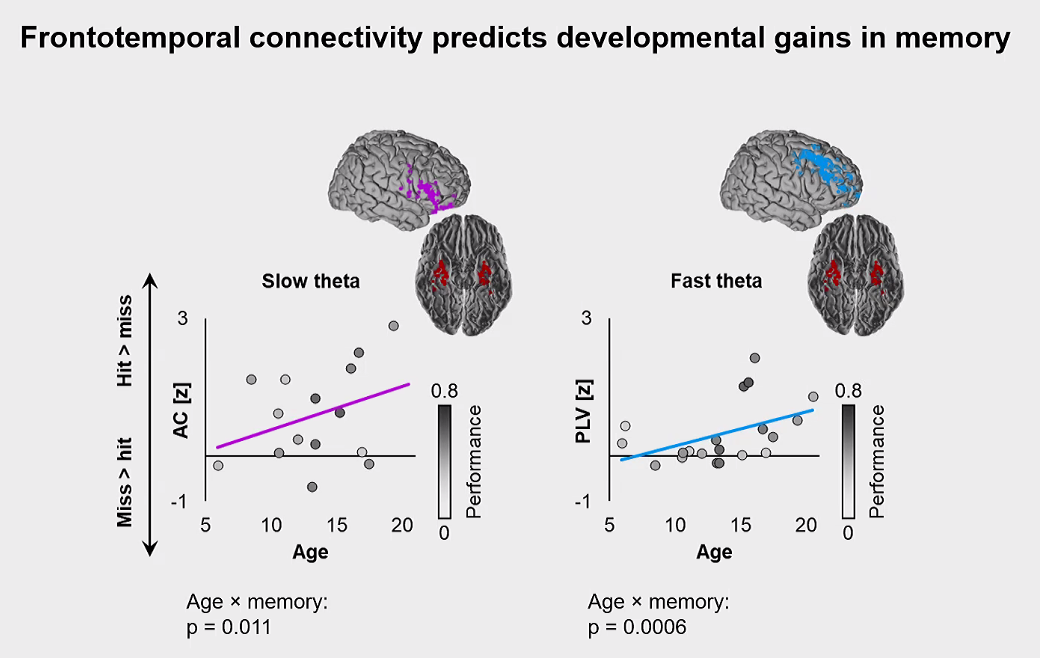
“If some of the analysis you showed, if their paired can you look at the difference between two dots, can you say that their correlated?”
- Initial results, n of 10 suggest something but statistically weak.
- Each dot in the
- Adolescents who had best white matter integrity in cingulum performed better. This relation was not reflected in the uncinate.
“Enough recordings for directionality?”
- Absolutely enough n, but this data set hasn’t explored it.
- She lives by starting simple before moving to directed connectivity.
- Suggestion of directionality in the connectivity explored, but open area at the moment.
“Relationship of fast to slow theta, almost two to one. Does this relate to performance if its closer to two to one? ”
- Have not explored yet, good instinct!
didnt catch exactly, but said that he would expect uncinate to be more active - Looked at uncinate tract integrity, found correlations with memory but no interactions with age.
- Not ruling out uncinate roles, but cingulum is a much more likely player from the data.
🧪 -> Refresh the Info
Did you generally find the overall content understandable or compelling or relevant or not, and why, or which aspects of the reading were most novel or challenging for you and which aspects were most familiar or straightforward?)
Did a specific aspect of the reading raise questions for you or relate to other ideas and findings you’ve encountered, or are there other related issues you wish had been covered?)
🔗 -> Links
Resources
- Put useful links here
Connections
- Link all related words