Dataview
LIST
FROM #Collection
WHERE file.name = this.Entry-For
NeuroFest 10th Anniversary - A decade of neurotech innovation
🎤 Vocab
❗ Information
NeuroFest 10th Anniversary Program
12:30 P.M. - 1:00 P.M. - Doors Open
Enjoy hands on, interective NeuroActivties, NeuroPoster presentations by trainees and vote for your favorite NeuroArt 2025 image!
1:00 P.M. - Director’s Welcome
Marie Burns, Ph.D. Professor of Ophthalmology and Vision Science, Cell Biology and Human Anatomy and interim Director of the Center for Neuroscience, welcomes you to NeuroFest 10th Anniversary and provides an overview of neuroscience of UC Davis and the day’s exciting presentations and activities
1:10 P.M. - NeuroFest 10th Anniversary Overview
Diasynou Fioravante, Ph.D., Associate Professor of Neurobiology. Physiology and Behavior, is a co-founder of NeuroFest, She studies small neural circuits to better understand learning, memory and plasticity
1:25 P.M. - New Genetic Technologies Reveal the Inner Lives of Neurons
Alex Nord, Ph.D. is a Professor of Neurobiology. Physiology and Behavior, Psychiatry and Behavioral Sciences. His research explores gene regulatory circuits and chromatin dynamics in the brain, with the ultimate goal of understanding the biological components of human diseases and brain disorders.
1:55 P.M. - Leveraging Stem Cell Models to Shed Light on Neurodegenerative Diseases
Martine Therrien, Ph.D., Assistant Professor of Molecular and Cellular Biology, is the NeuroFest 10th Anniversary Committee Chair. She uses stem cell models to study how genetics and the environment impact the brain in health and disease.
2:25 P.M. - 3:10 P.M. - Break for NeuroArt, NeuroActivities, and NeuroPosters
Last chance to visit NeuroActivities, NeuroPosters and the NeuroArt 2025 exhibit and vote for your favorite image!
3:15 P.M. - Emerging Deep Brain Stimulation Therapies for Parkinson’s Disease
Carina R. Oehrn, M.D., Ph.D., is an Assistant Professor of Neurological Surgery, Her research explores the neural networks underlying cognitive and affective processing in Parkinson’s disease to develop novel deep brain stimulation therapies to improve non motor symptoms.
3:45 P.M. - Model-Based Control: A New Stimulation Approach for Treating Neurological and Psychiatric Diseases?
Jochen Ditterich, Ph.D., Professor of Neurobiology, Physiology and Behavior, studies neural mechanisms linking perception and action, In particular, decision-making, to better understand the neural foundations of cognition.
4:15 P.M. - NeuroPoster Awards, Passport Drawing, and Closing Remarks
- Passport Drawing and Closing Remarks Will DeBello, Ph.D., Associate Professor of Neurobiology, Physiology and Behavior and NeuroFest 10th Anniversary Committee Co-Chair
- Kostas Zarbalis, Ph.D., Professor of Pathology and Laboratory Medicine and NeuroFest 10th Anniversary Committee Co-Chair
✒️ -> Scratch Notes
Taken from handwritten notes
1st → 2nd
Alex Nord: Inner lives neurons
Martine Therrien: Stem cells and neurodegeneration
Talk 1: New Genetic Technologies Reveal the Inner Lives of Neurons
Alex Nord
1:25: Talk Qs:
• How does DNA → brain
• What are cell types in brain
• How do mutations change neurons & behavior
• How can they be leveraged
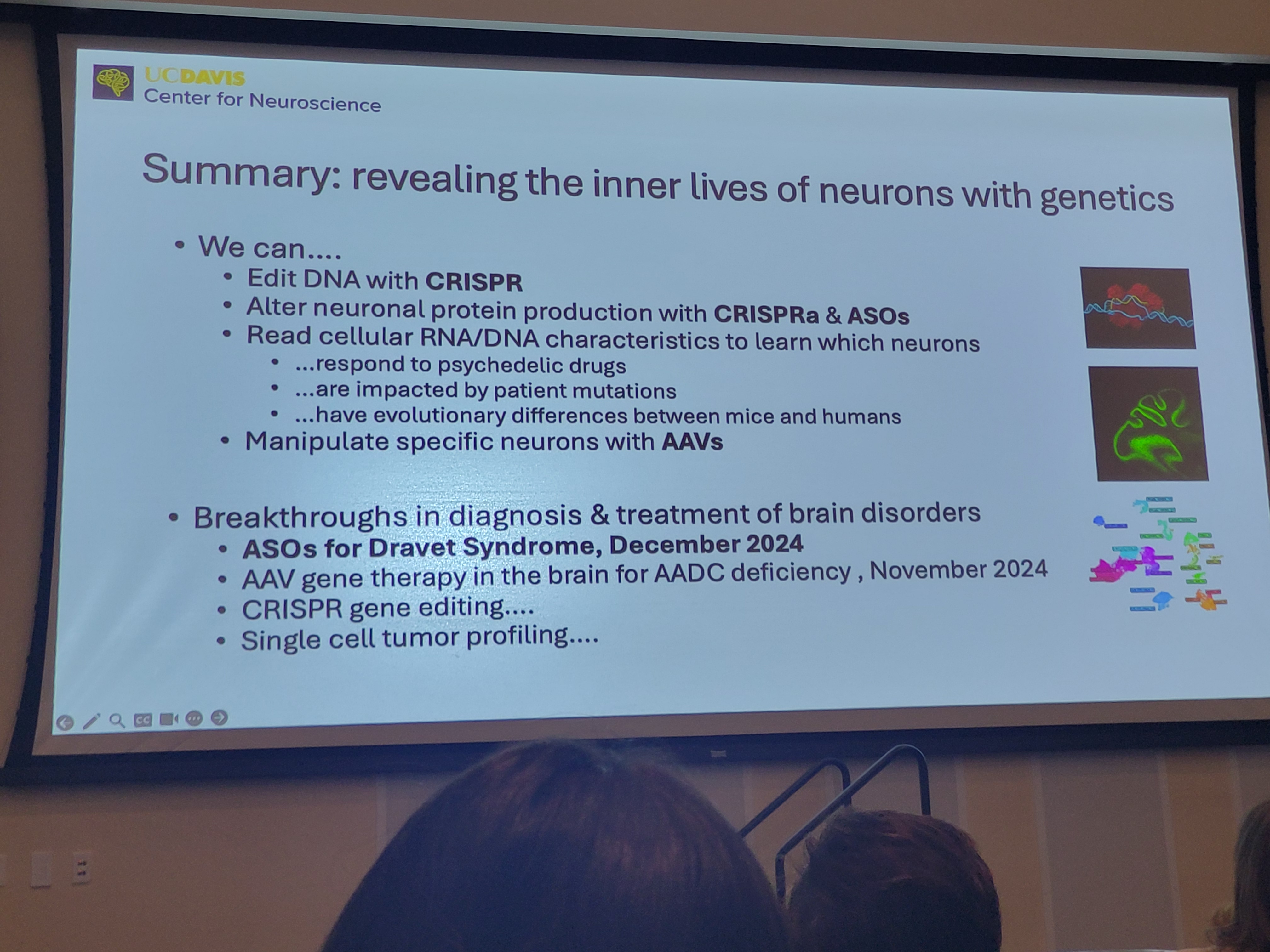
CRISPR/CAS can edit the genome
Works through:
- Cas9 endonuclease can do a double strand break of DNA
- RNA loaded by Cas can read read along the DNA
After this you can cause:
- Random mutations (virology usefulness)
- Gene editing
CHD8 - Key gene they’re studying, thought to cause brain overgrowth.
- Autism?
CRISPRa - (Activational)
CRISPRi - (Inhibitory)
- tools to turn genes on & off
ASOs - Antisense Oligonucleotides
- Change translation
DNA
↓ ← Crispr
RNA
↓ ← ASOs
Protein
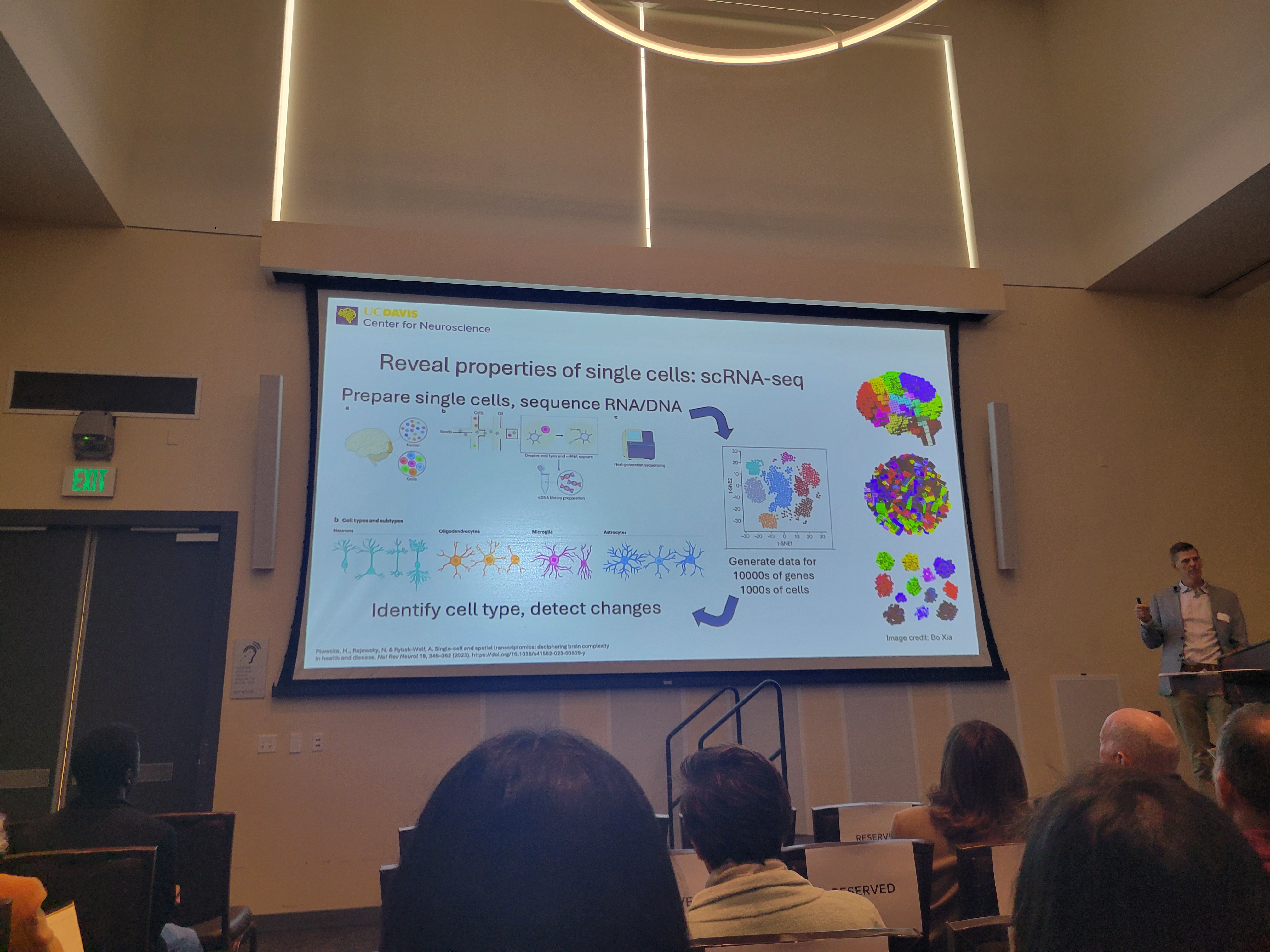
Properties of single cells: scRNA-seq
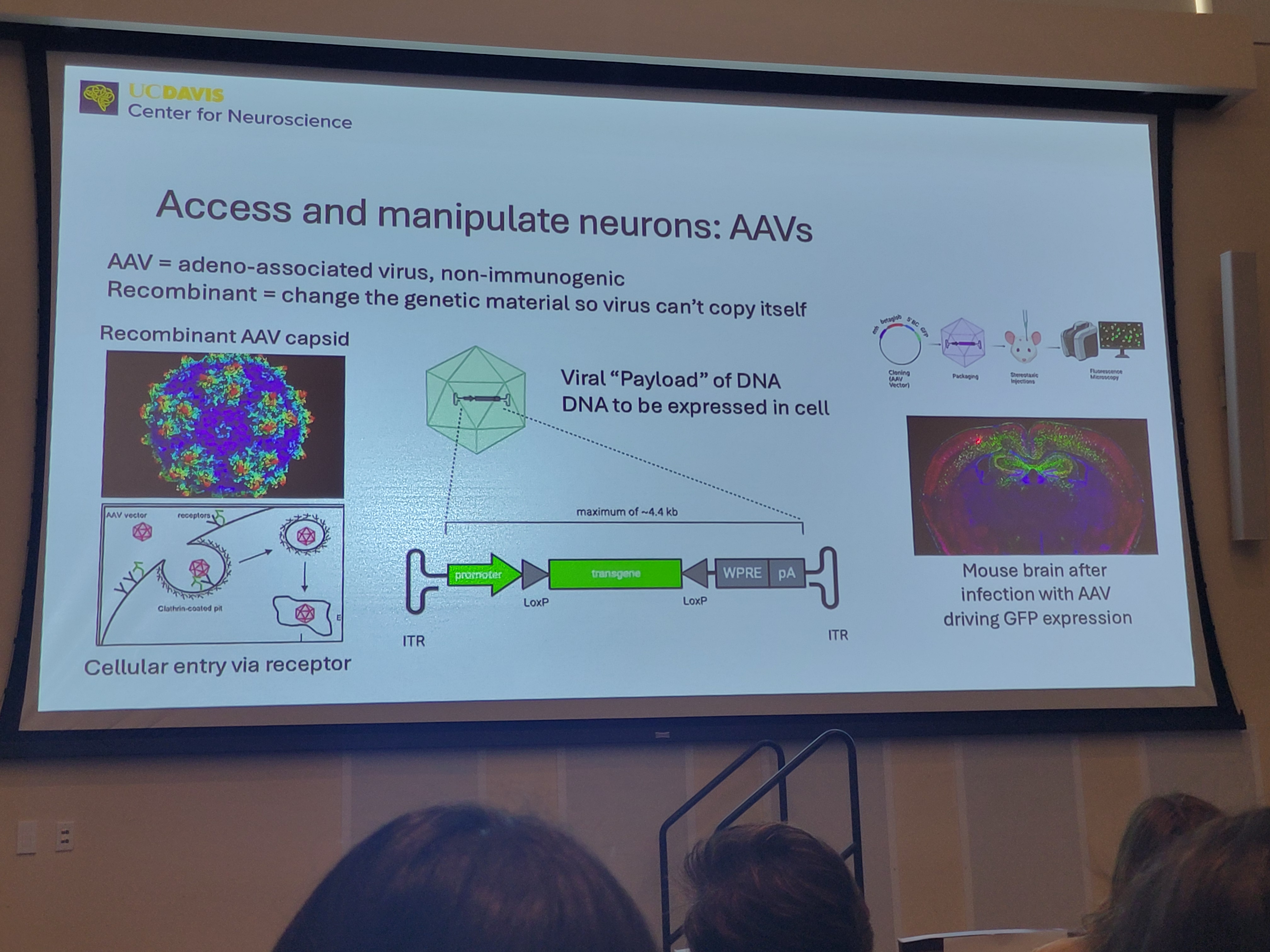
Access & manipulate single neurons?
- AAVs
AAV = adeno-associated virus, non-immunogenic
Recombinant = change the genetic material so virus can’t copy itself
Virus payload of DNA
DNA to be expressed in cell
Talk 2: Leveraging Stem Cell models to Shed Light on Neurodegenerative Diseases
Martine Therrien
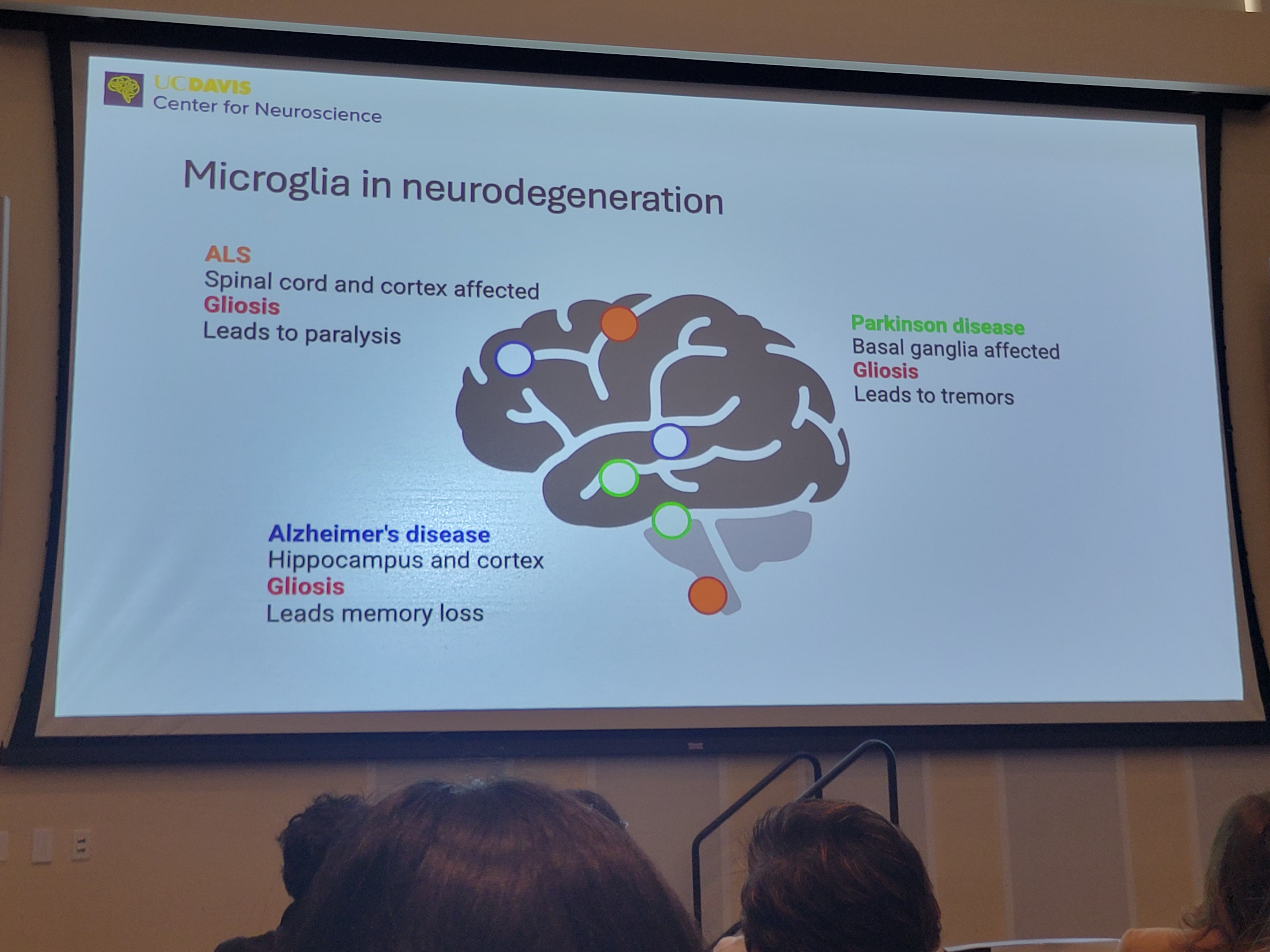
Age dependent neurodegenerative diseases
- ALS
- Alzeihmers
- Parkinson’s
Alzheimers will be continued
Its very prominent:
@ 45 years old, 1/5 women and 1/10 men will have it
- 2/3 of alzheimers victims are women
Some treatments, but mostly attributed to lifestyle as a remedy
- Over 100 risk genes identified
Pluripotent - Capable of developing into multiple different cells
iPSC - Induced Pluripotent Stem Cells
Brain is more than neurons:
- Microglia
- Astrocytes
- Oligodendrocytes
- …
Amyloid beta is floated as a potential treatment
Microglia around amyloid plaque?
- APP creates amyloid?
Shown a cool video of microglia swarming a laser injury
- They immediately engulf it
APOE - Genetic risk factor and disease microglia marker
- Produces lipid droplets? Fat?
To study why some microglia are diseased and others aren’t:
- link gene expression to function
Villages to study hundreds of donors simultaneuosly, cut down on manpower of seperating them into their own dish:
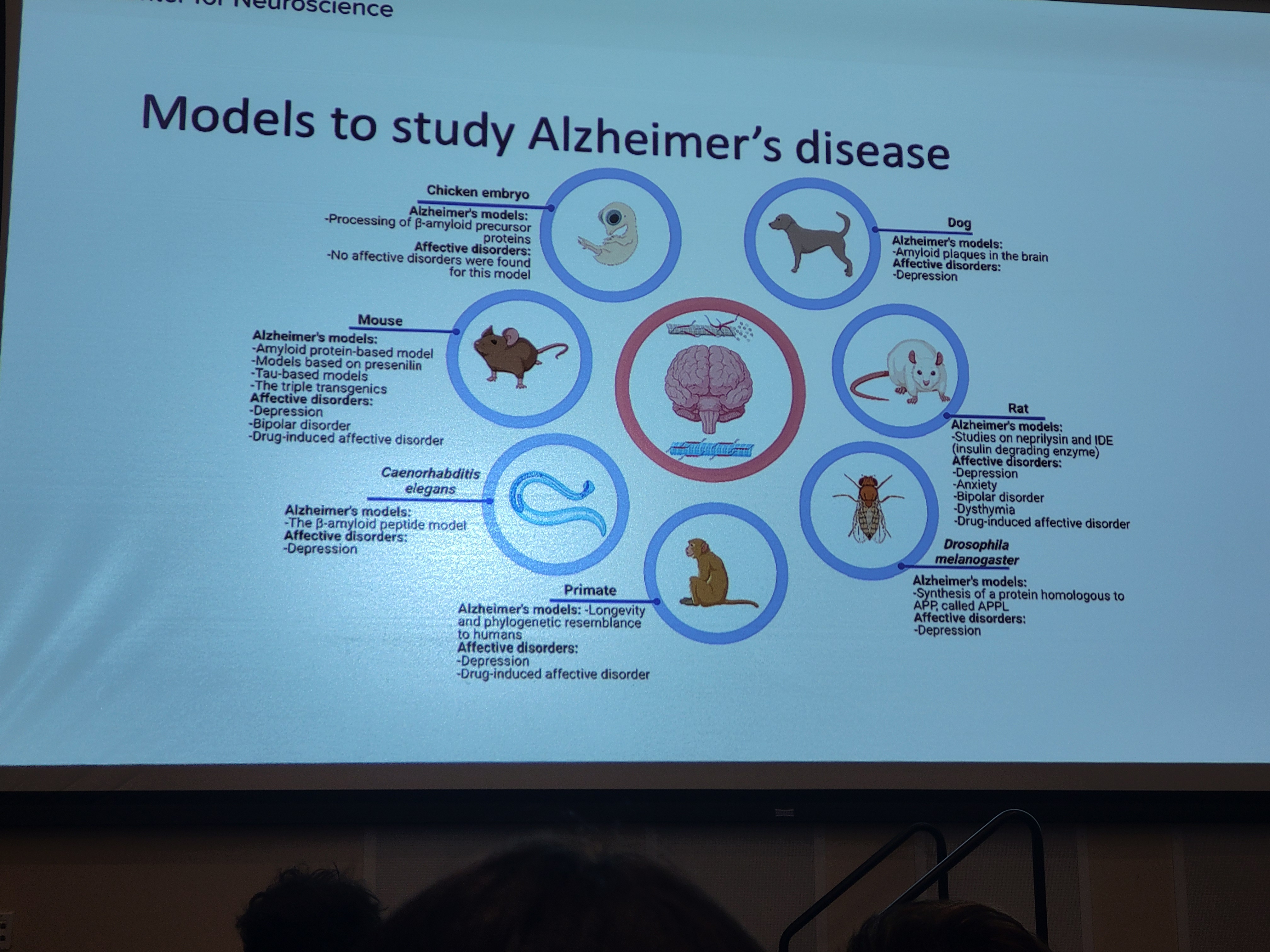
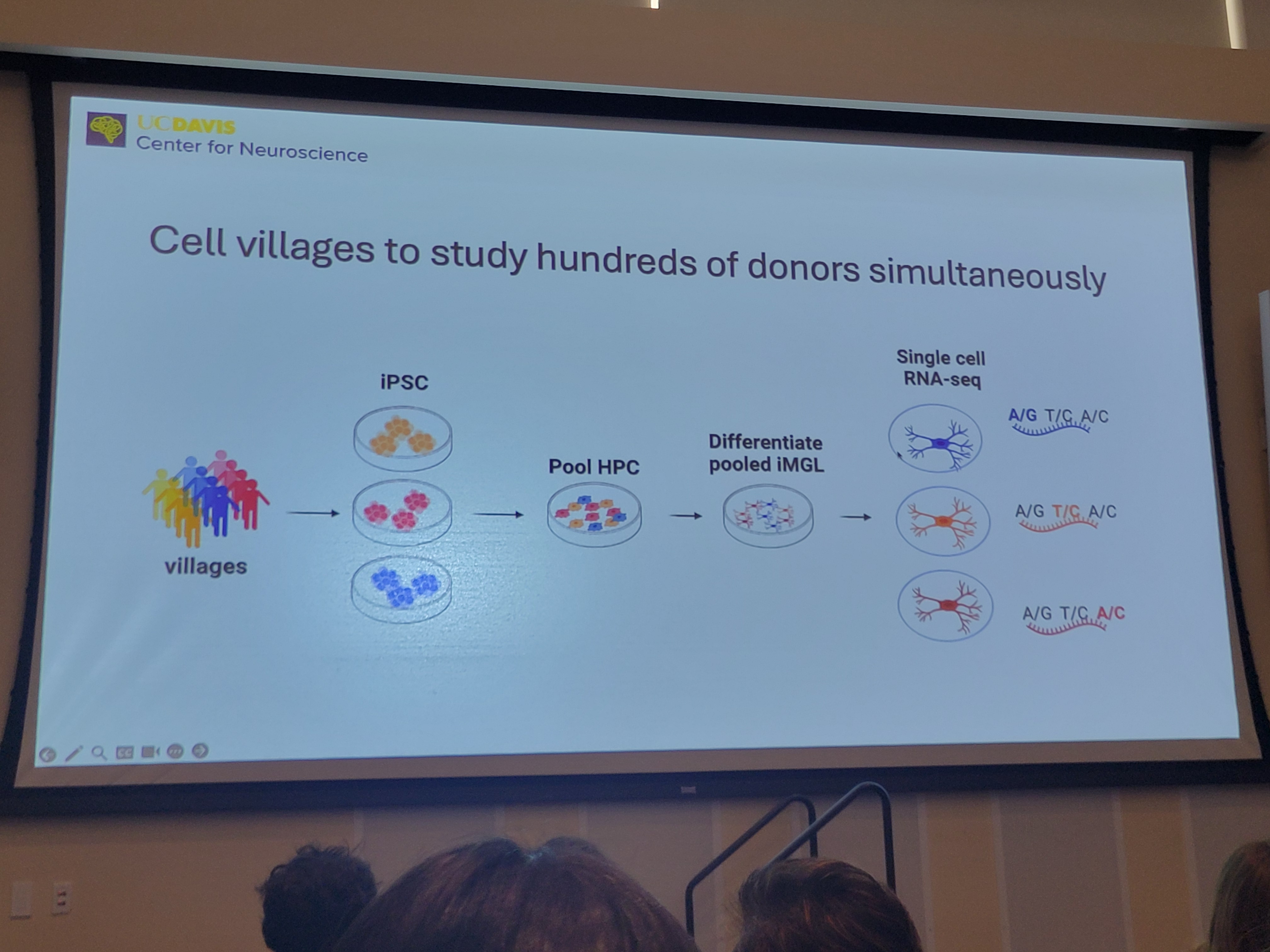
mtherrien@ucdavis.edu
gliomics-lab.com
Talk 3: Emerging Deep Brain Stimulation Therapies for Parkinson’s Disease
Carina R. Oehrn
Talk seems to be about this paper: Chronic adaptive deep brain stimulation versus conventional stimulation in Parkinson’s disease: a blinded randomized feasibility trial | Nature Medicine
came in a few minutes late :(
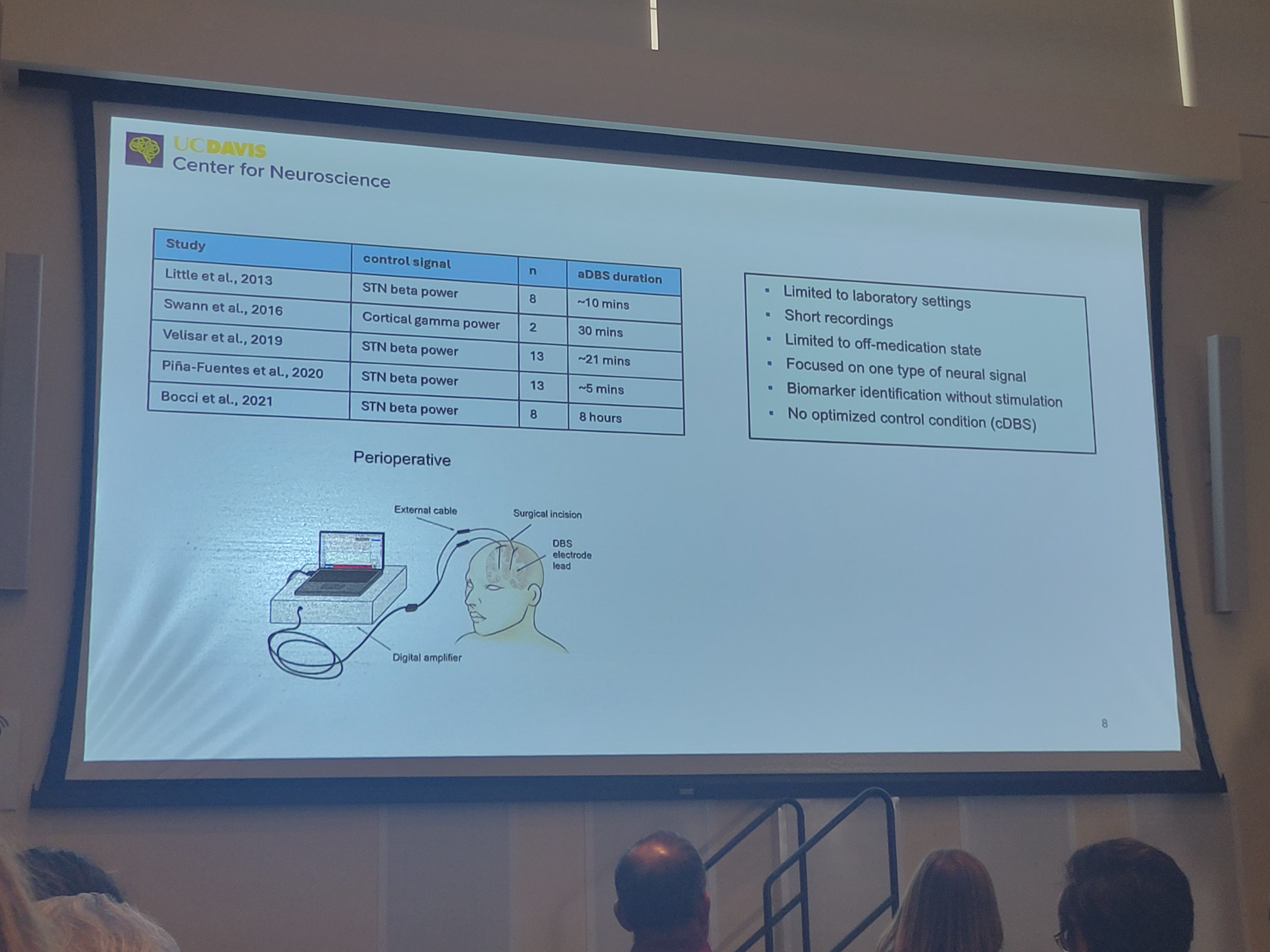
- STN - Subthalamic Nucleus
Why aren’t these treatments more common?
- New tech is still emerging
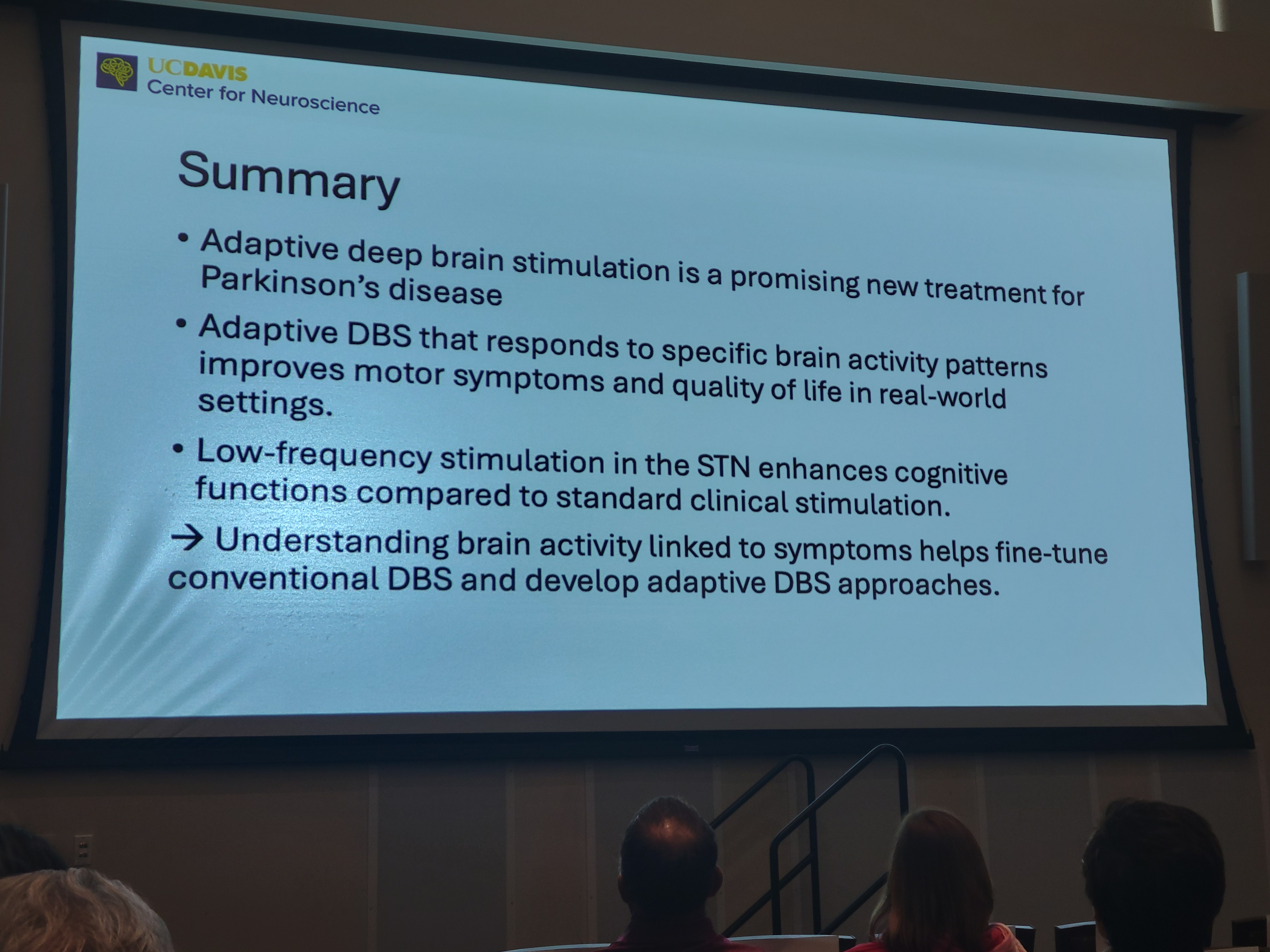
Chronic Adaptive DBS:
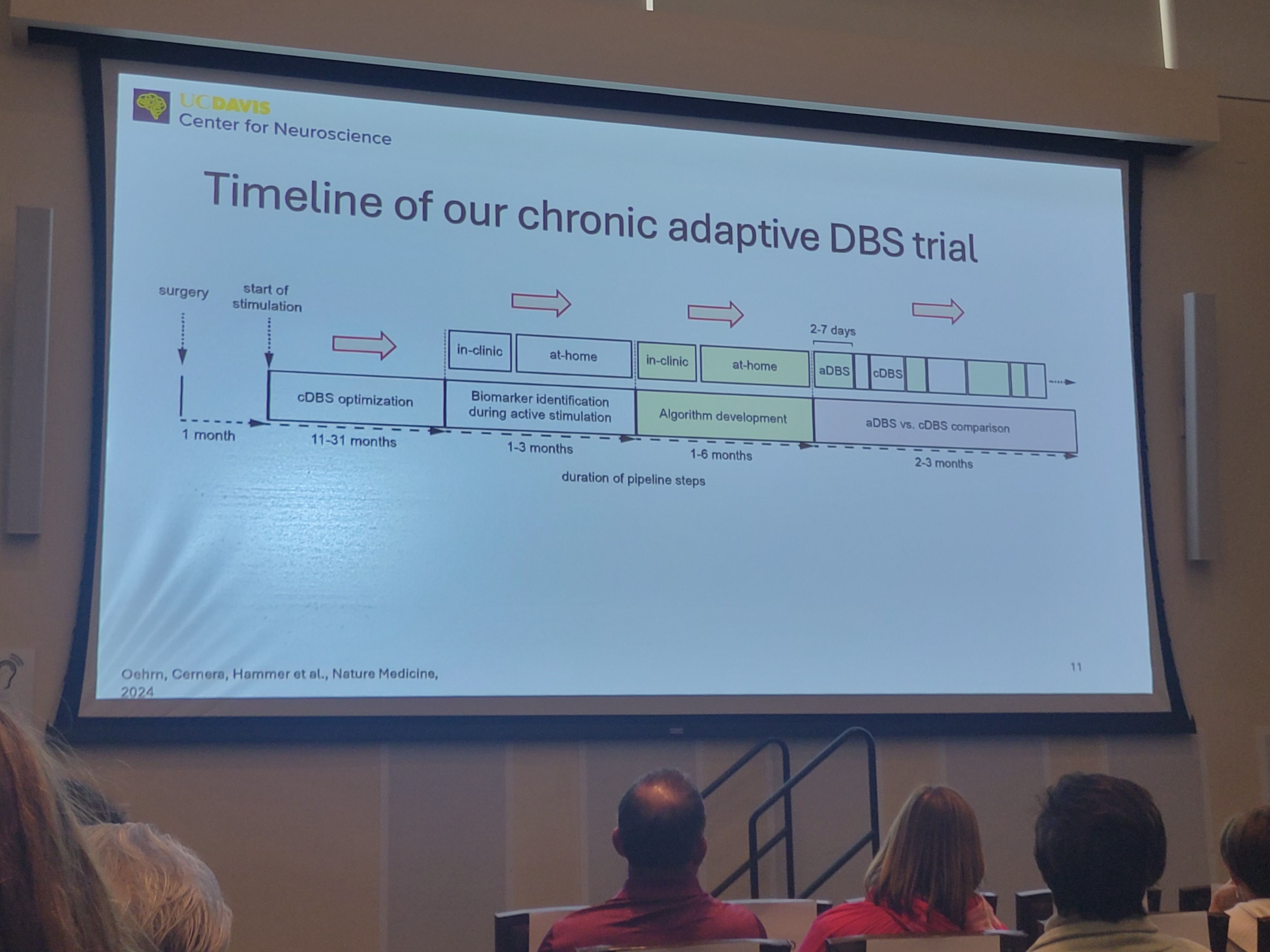
Neural signal biomarkers of symptom states:
- Gamma oscillations fluctate with most bothersome symptoms, a precursor
aDBS - adaptive DBS
Stimulation-stimulation gamma power fluctuates at home during constant stimulation
Article about the technology, testimonial - A Personalized Brain Pacemaker for Parkinson’s - The New York Times
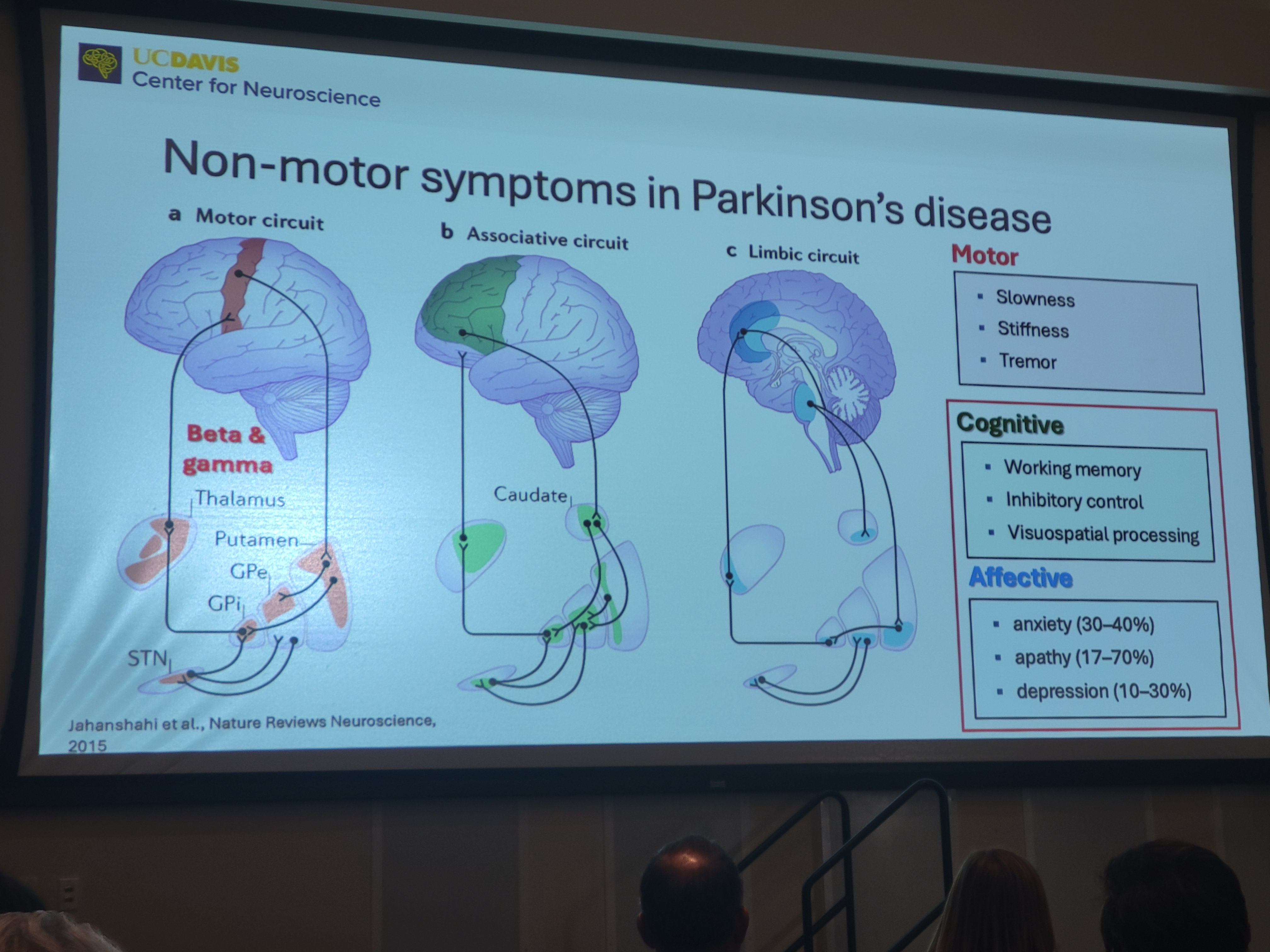
Different frequencies of DBS can be beneficial:
- Theta stimulation can help WM
- Gamma stimulation helps motor abilities
creohrn@ucdavis.edu
Oehrn Lab | The Oehrn Lab
Q&A Notes:
This is novel (the adaptive part)
Most are one way, only stimulating. Recording and adapting has shown potential.
Also, saves time in adjusting/tuning stimulation. These tend to be long 1 hour sessions every 3 months
Tremors are a weird symptom?
- Auditory stimulation at a frequency has shown potential. Putting the good frequencies in the brain through sound.
- The only symptom it seemed to improve
- Grows resistant to DBS
Talk 4: Model-Based Control: A New Stimulation Approach for Treating Neurological and Psychiatric Diseases?
Jochen Ditterich
Role of computational models in neuroscience?
- Fundamental neuroscience (understanding neural mechanisms)
- Translational applications (therapeutic neuromodulations)
Engineers approach to controlling dynamic systems:
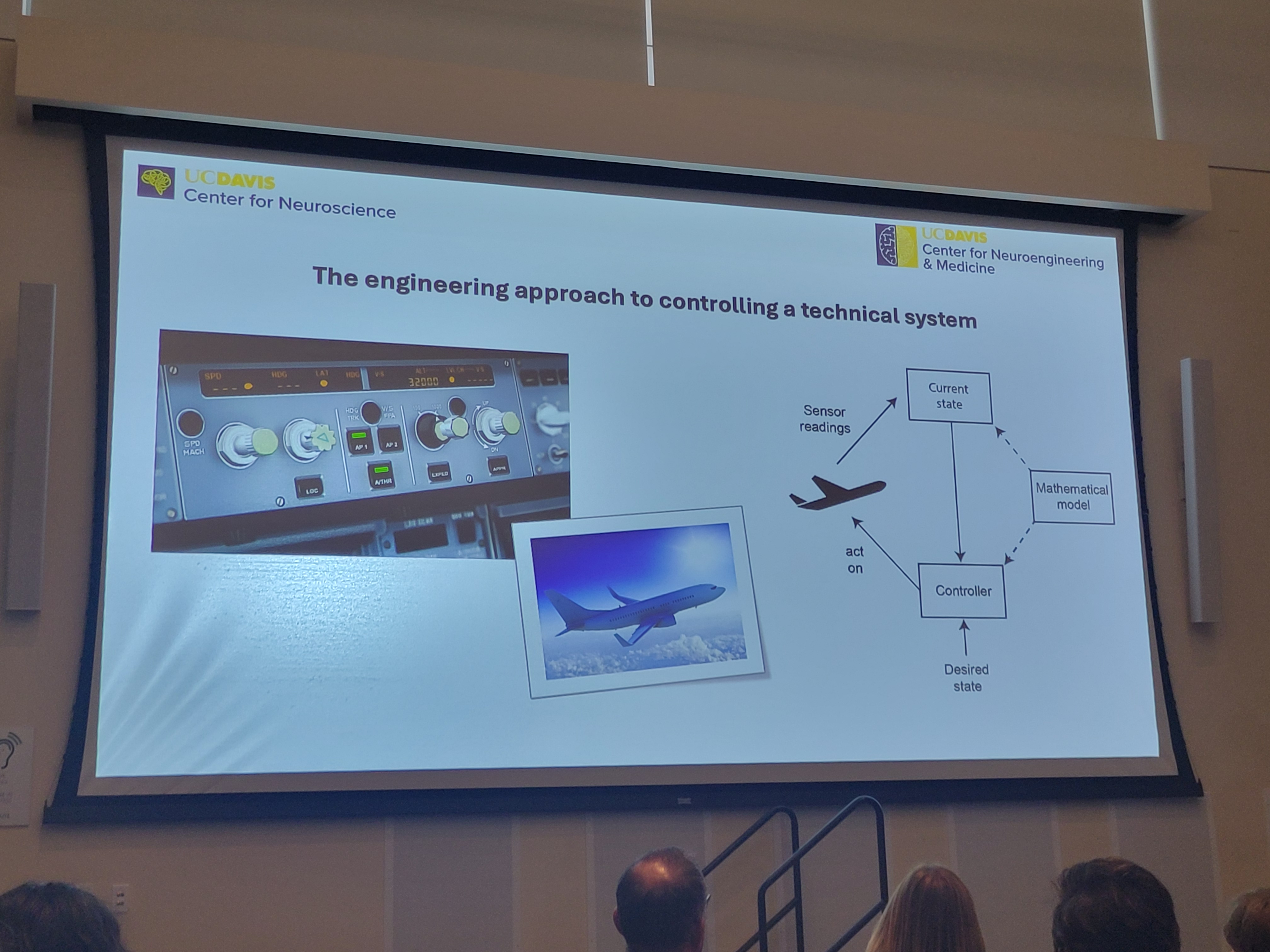
In the brain instead:
- Record neural activity
- Act on the brain (electrical stim)
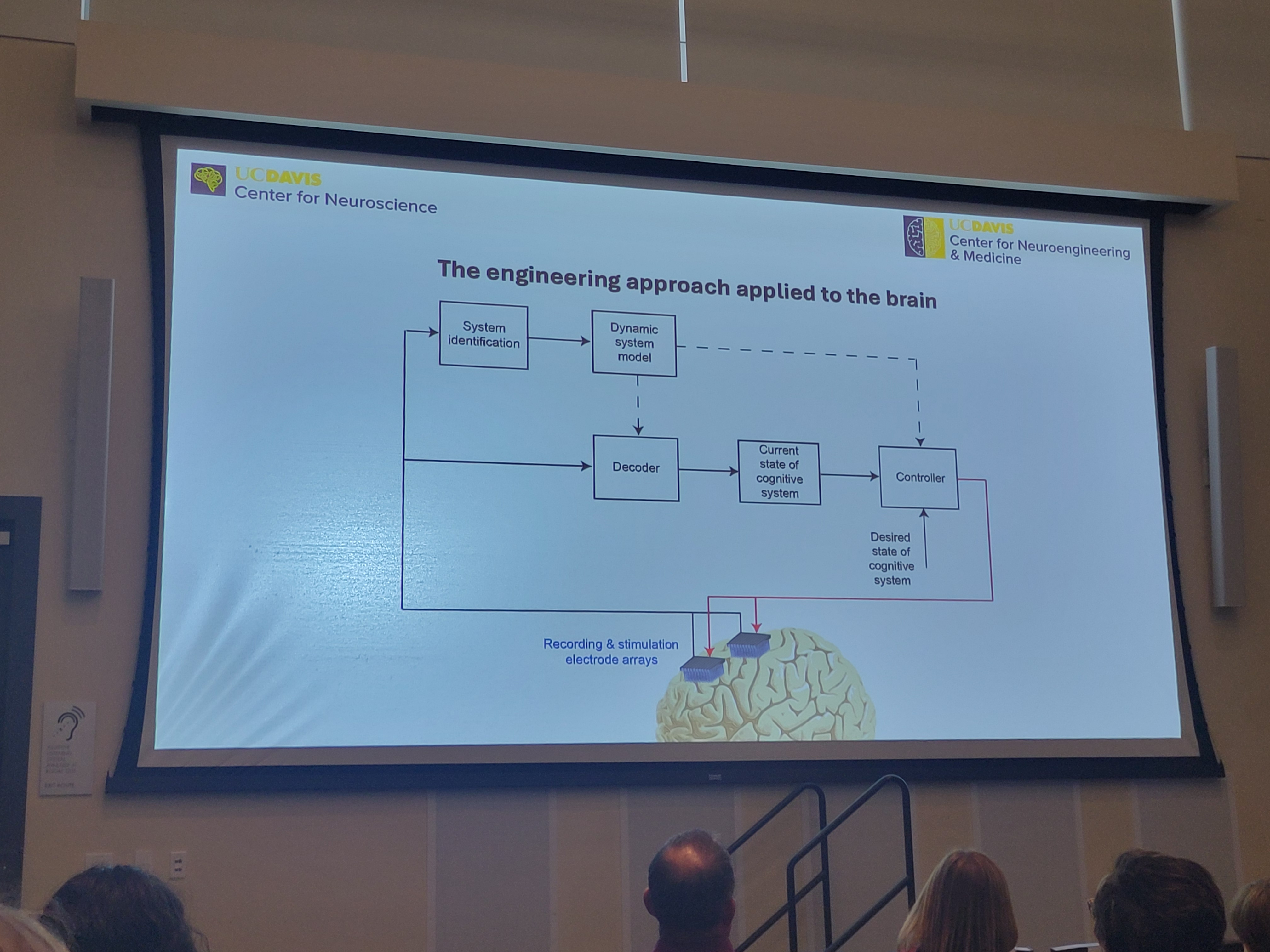
Do a model task, and record from parietal association cortex
He explains dynamic systems models and vector flow fields
Model Based Control - Understanding the dynamic system, and taking ‘smart’ routes to desired outcomes (avoiding heavy resistance, etc.)
🧪 -> Refresh the Info
Did you generally find the overall content understandable or compelling or relevant or not, and why, or which aspects of the reading were most novel or challenging for you and which aspects were most familiar or straightforward?)
Did a specific aspect of the reading raise questions for you or relate to other ideas and findings you’ve encountered, or are there other related issues you wish had been covered?)
🔗 -> Links
Resources
- Put useful links here
Connections
- Link all related words