Dataview
LIST
FROM #Collection
WHERE file.name = this.Entry-For
Insert entry name
🎤 Vocab
❗ Information
Methods
Non-invasive bulk tisue imaging in vivo
- fMRI - surrogate for blood flow, measures BOLD
Single cell electrophysiology in vitro - Resort to animal models - rats, mice (more mice now because of genetic engineering)
- Recently, became possible in human brain
Microwire recordings in Humans
Epilepsy patients, candidates for epilepsy surgery
- 64-128 microwires (40 um diameter) able to record single neuron activity and LFPs
- “Depth electrodes”
- Effective recording bandwidth DC - 9 kHz
Intracranial Electrode Implantation
Region of Interest (ROI):
- MTL - Most frequent cause of focal epilepsy
- Likely due to feedback architecture, in HIP
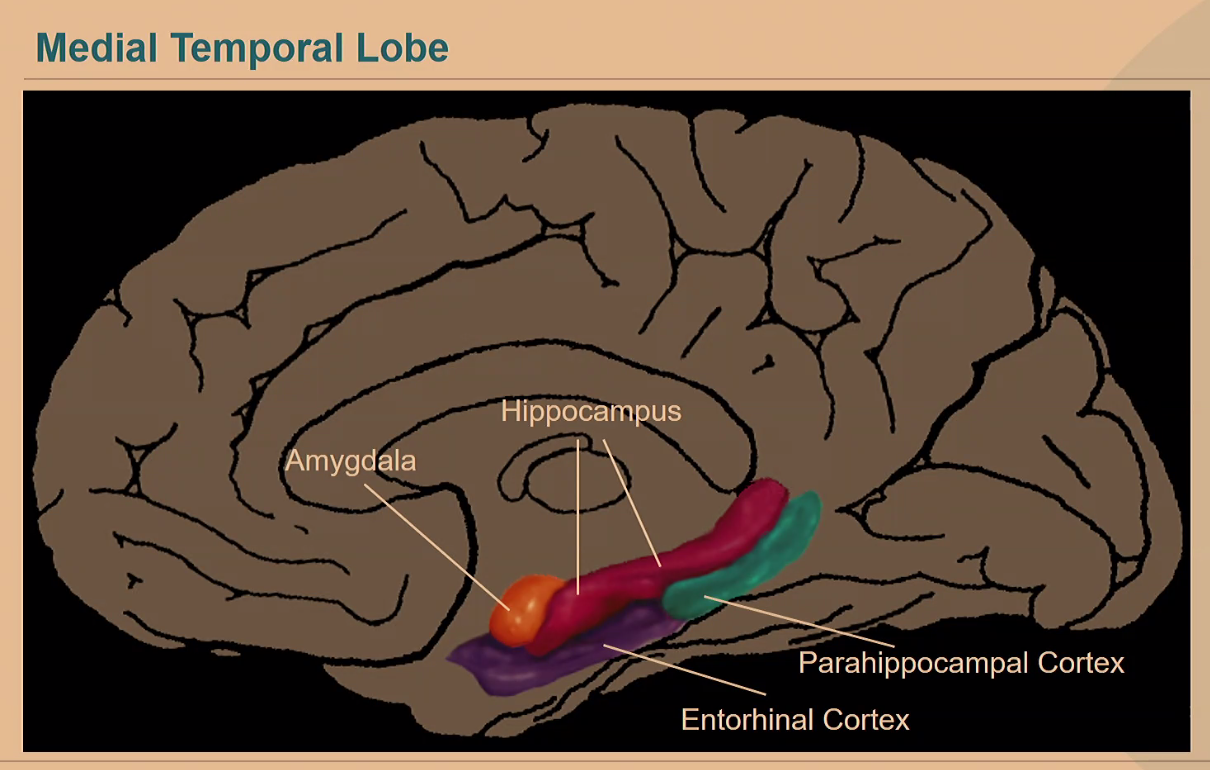
- Likely due to feedback architecture, in HIP
Patients usually only participate, because they’re bored otherwise
The experiments can’t be interesting (because they have to repetitive and designed to allow statistics), but patients are excited for small talk before and after
Spike detection and Spike Sorting
Can separate spikes depending on size, shape, and timing (think of distance from recorder, and originating neuron spike differences)
Distributed Coding vs Sparse Coding
Distributed Coding - Combinations of neurons representing itself
Sparse Coding - One neuron represents something itself, grandmother cell
Concept Cell
Neuron that fires in response to Marilyn Monro
Also, same type of cell that:
- Fires for image of Michael Ballack, his written name, and name spoken by computer voice, while not firing for nearly anything else
These “semantically invariant concept cell” have only been found:
- In humans (difficult to prove semantic understand in animals)
- In temporal lobe
Domain Specificity
Human amygdala encodes person identity, not gaze
Response Latencies:
- About twice as long to response as non humans
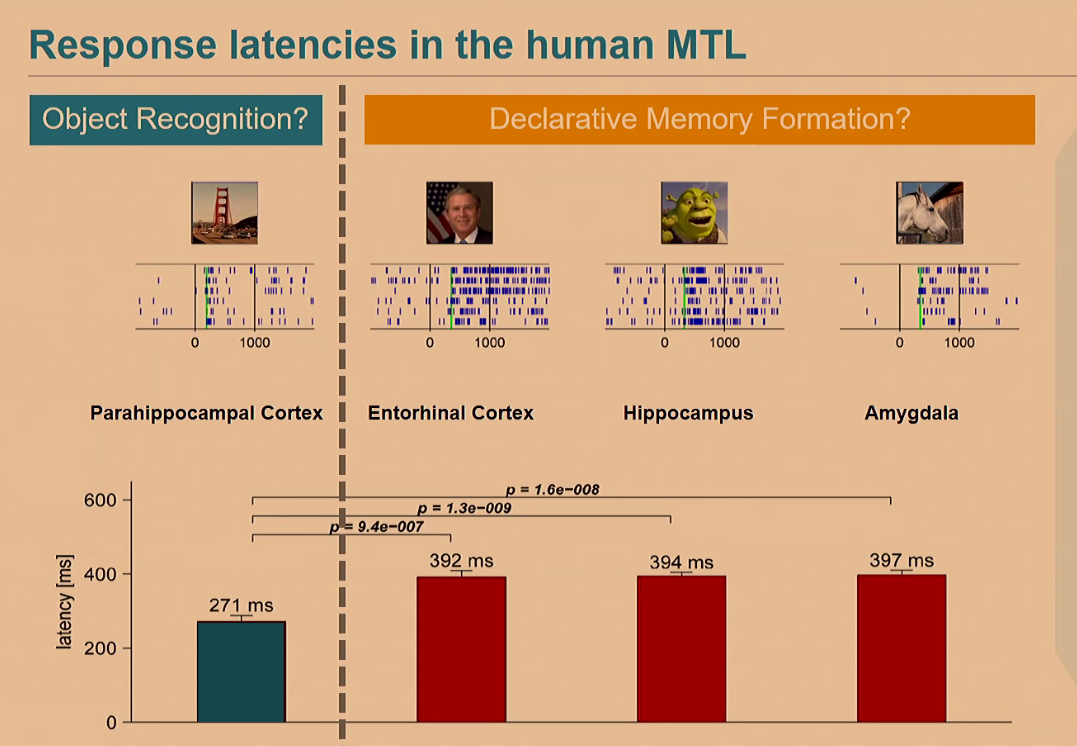
Hypothesis:
What is function of these concept cells?
- MTL is essential for episodic memory encoding
- Responses too late for object recognition
- Responses follow conscious, subjective perception
Semantically invariant neurons (‘concept cells’) as building blocks for episodic memory - Sparse coding allows for simultaneous activation
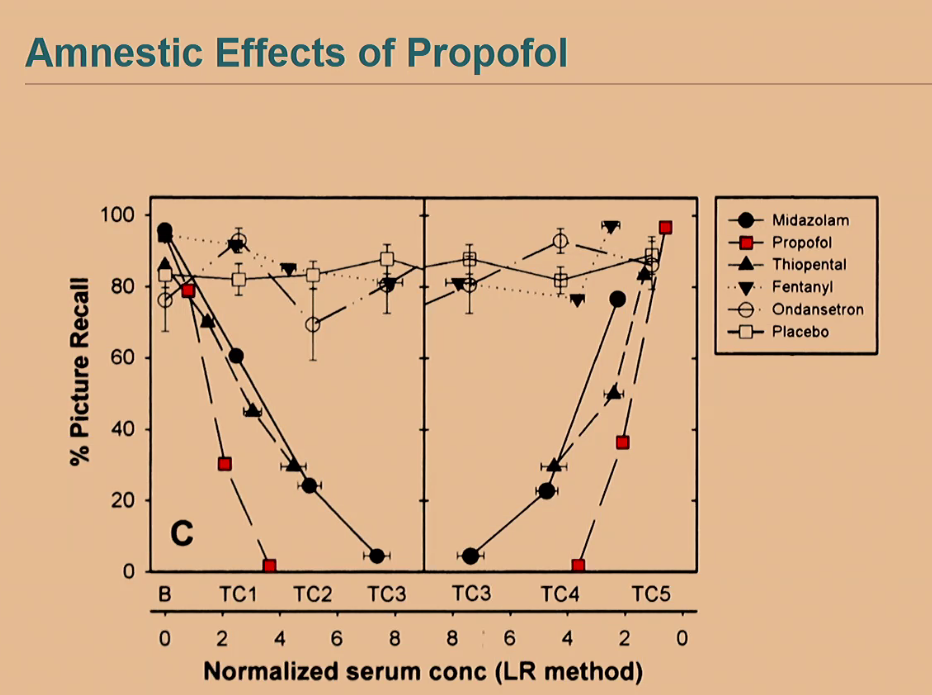
- Some things are difficult to disentangle experimentally, so use DRUGS
- “Pharmacological Manipulation”
Subjective observed effects of Propofol - Feel a little tipsy, euphoric, talkative, hard to focus on task
Previous study gave a target of 1.5ml of propofol, so they used that
Response under propofol is delayed, and ‘blurred’ out
Concept cells - independent, very different from rodent place cells
- Stay stable over test time course of 2 weeks, no knowledge over time course of a year
Summary
- Explicit, selective, and invariant single-neuron representations of familiar concepts/persons in the human temporal lobe (“concept cells”)
- Concept cells show semantic tuning and are context-independent
- Representations follow conscious, subjective perception rather than the physical stimulus, with a posterior-anterior anatomical gradient
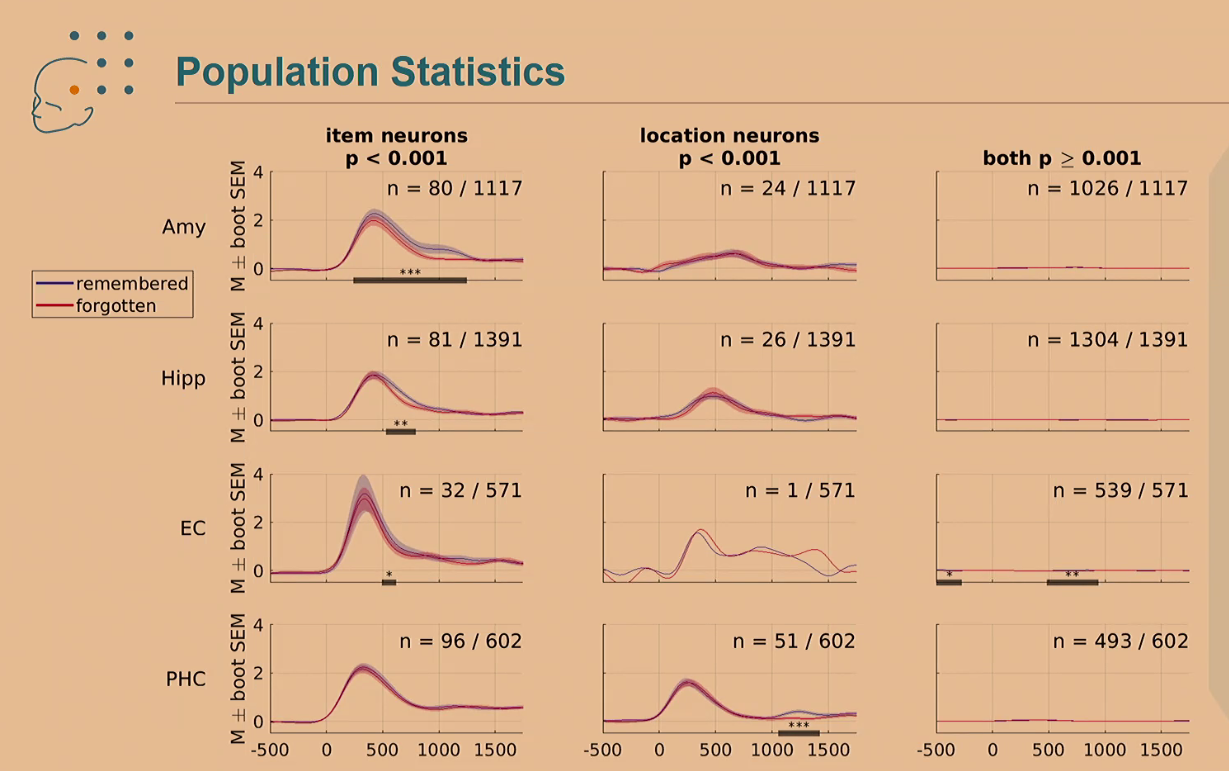
- Activity of item neurons in the hippocampus, amygdala, and EC determines successful long-term memory encoding of specific items.
- Activity of location neurons in the PHC determines successful long-term memory encoding of specific locations.
- Concept cells as semantic building blocks for episodic memory
🧪 -> Refresh the Info
Did you generally find the overall content understandable or compelling or relevant or not, and why, or which aspects of the reading were most novel or challenging for you and which aspects were most familiar or straightforward?)
Did a specific aspect of the reading raise questions for you or relate to other ideas and findings you’ve encountered, or are there other related issues you wish had been covered?)
🔗 -> Links
Resources
- Put useful links here
Connections
- Link all related words