Dataview:
list from [[]] and !outgoing([[]])📗 -> Statistical Neuroimaging Analysis: An overview
🎤 Vocab
Neuroimaging = NI
Neuroimaging analysis (NIA): Used for recording the brain
- Neurological disorders
- Aging
- BCI
❗ Information
Lexin Li
Prof at UC Berkeley - https://lexinli.biostat.berkeley.edu/
📷 -> Pics
📄 -> Methodology
- Simple or full description
✒️ -> Talk scratch notes
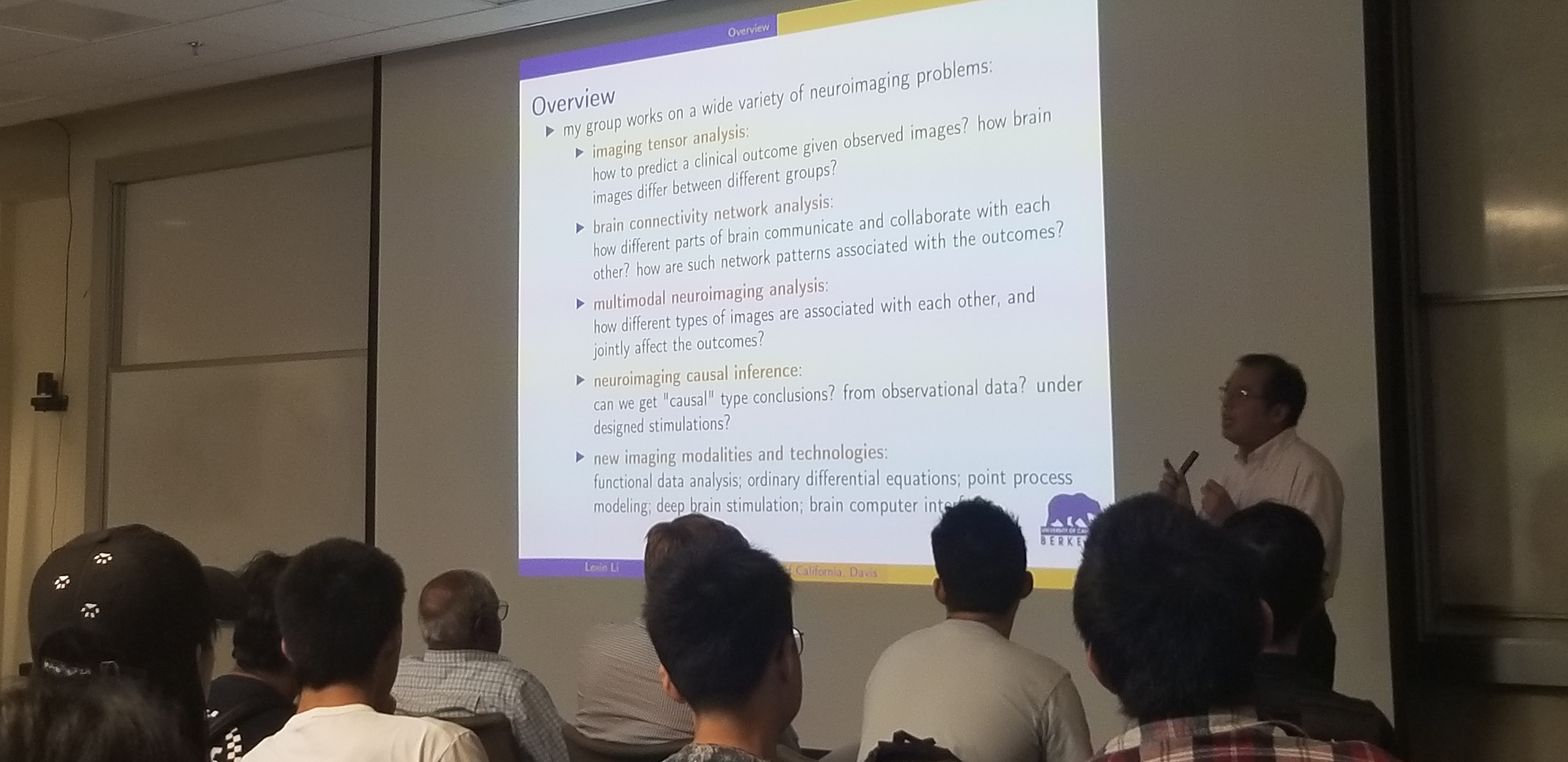
- NIA: Very hard, introduces many problems
- Tensor data, ODE, point process
- Brain networks, graphical models
- Causal inference, multimodal analysis
- Large NI studies, and public databases are becoming available
Imaging Modalities:
- MRI< fMRI, PET, EEG, electrocorticography (ECoG), diffusion tensor imaging (DTI), neuronal spike trains…
Topics:
- Imaging Tensor Analysis: Understanding individual brain regions
- Look at MRI image of patient, tell if they have a disorder
- Brain Connectivity Network Analysis: How do networks interact? How are they associated with outcomes?
- Multimodal NIA: How different ttypes of images are associated with each other, and jointly affect the outcomes?
- NI Causal Inference: Can we get “causal conclusions?”
- New Imaging Modalities and Technologies: picture in phone…
🧪-> Case Studies
Case Study 1:
Amyloid-beta and Tau are closely associated in terms of spatial accumulations, and association patterns are believed to be affected with age
- Potentially associated with Alzheimers too?
Looking to study association in concentration and location
Association between modalities:
Each modality can be high dimensional
Can rephrase to seeking linear combinations of X, Y and Z are the most contrastive (contrastive?)
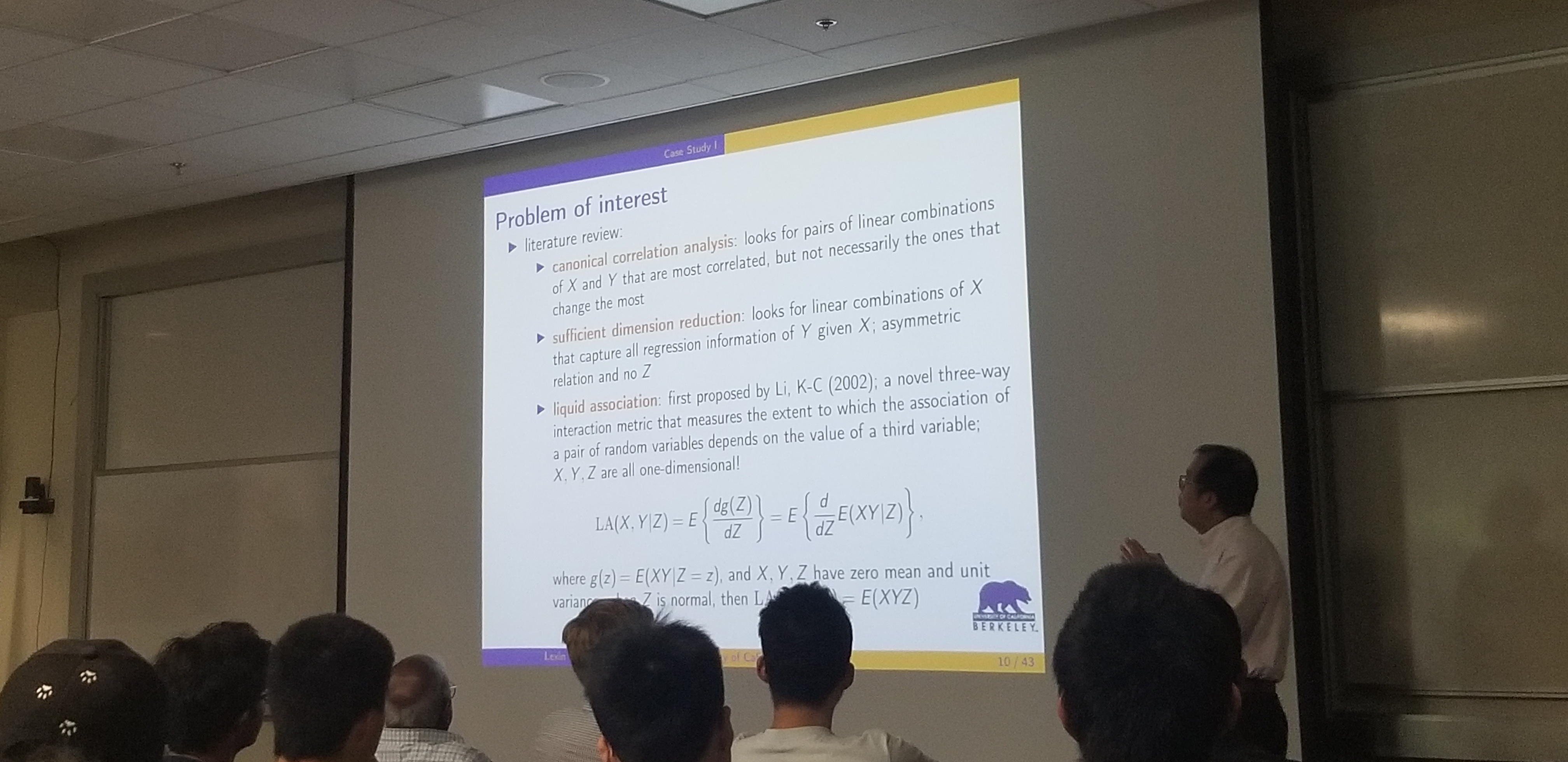
Literature Review: CHECK PHONE FOR BETTER DESCRIPTION
- Canonical Correlation Analysis
- Sufficient Dimension Reduction
- Liquid Association
They suggest the generalized liquid association (GLA) as the solution
Tensor Tucker Decompization problem?
ADNI Problem Studies:
- n=81
- modality X: amyloid-beta deposition …
took a picture
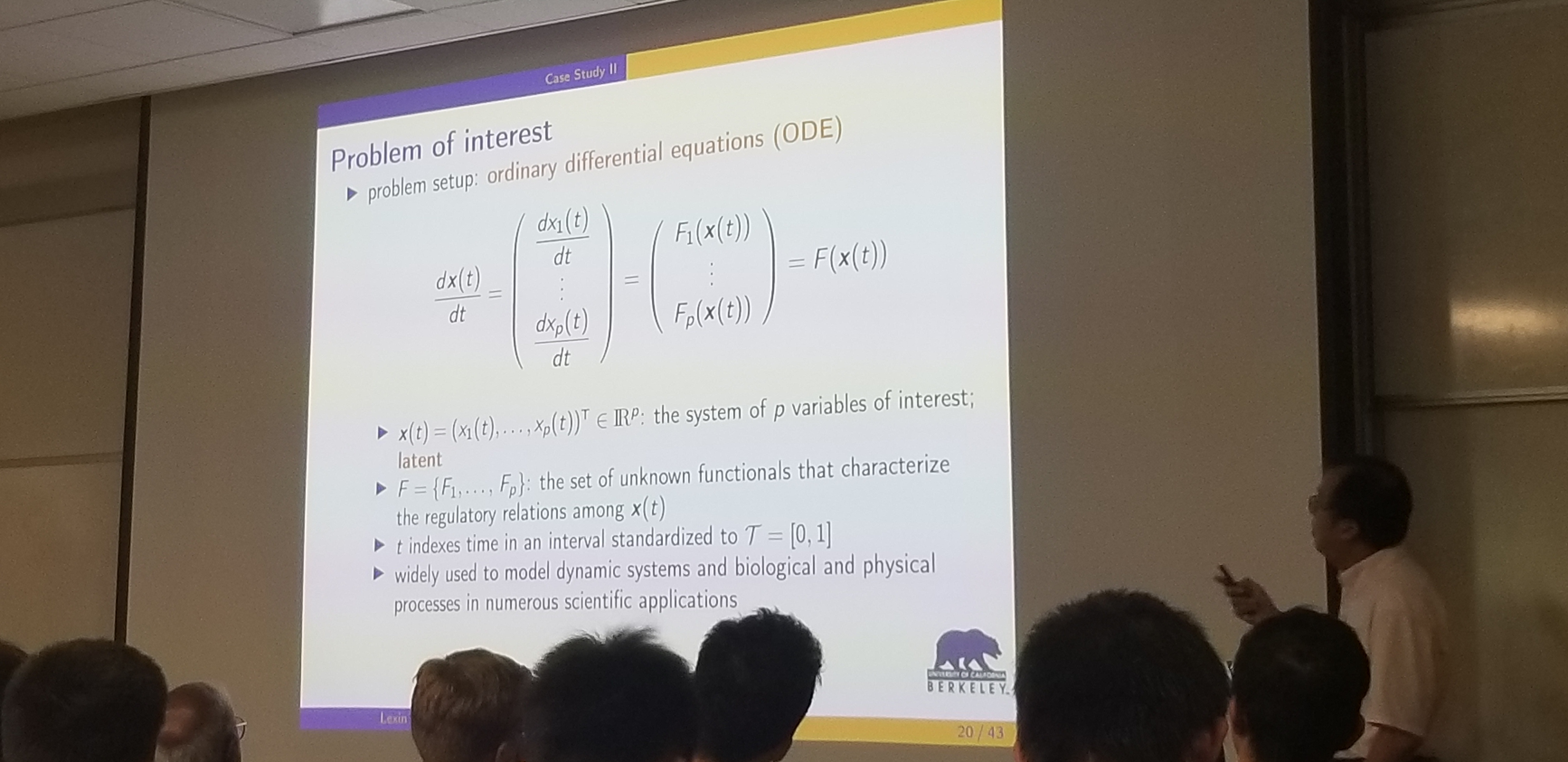
Case Study 2:Kernel ODE?
Brain Effective Connectivity Analysis: Uncover the directional influence that one neural system exerts over another
- Can be applied to: gene regulatory network analysis based on time-course gene expression data
- Also diabetes study / artificial pancreas
ECoG study of brain during decision-making (DM)
Electrocorticography data: electrode x time data matrix
Patient performed gambling tasks with different levels of risk (high risk vs low rish)
Electrodes placed in the OFC: 61 electrodes over 3001 time points
Take results with caution
Experiment is done with 1 participant, over multiple trials. Generalization of results should be done with caution, only really applicable to the 1 participant, who was chosen because of neurosurgery anyway
Regulatory Functionals
Special Cases with assumptions, not the best approach but good to know
- Linear ODE
- Additive ODE
- Neural ODE?
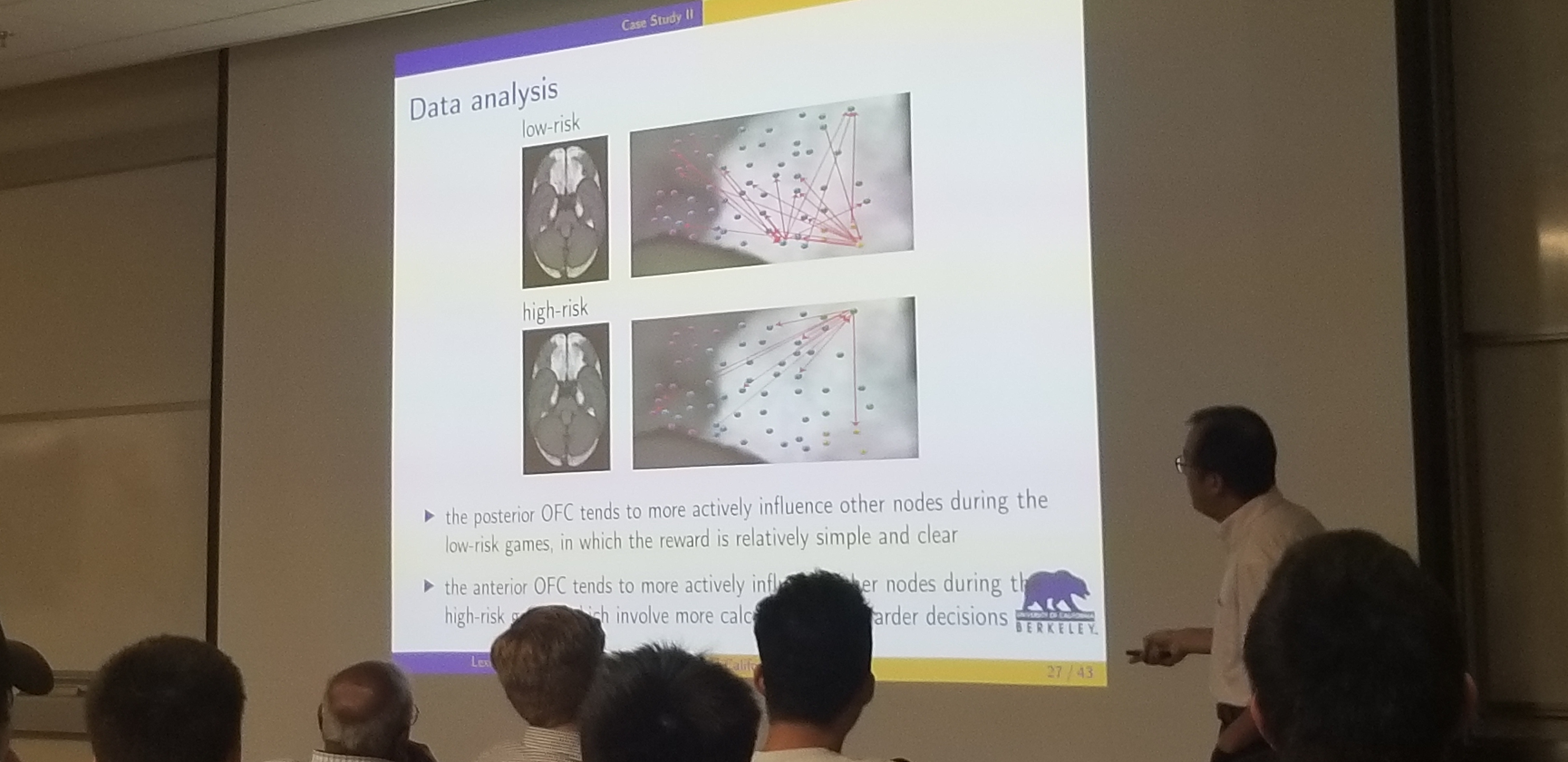
The data analysis (took a photo), show that different parts of OFC take priority in spreading activation
- Posterior OFC tends to actively influence other nodes during low risk games, reward is simple and clear
- Anterior OFC tends to actively influence other nodes during high risk games, where they involve more calculation
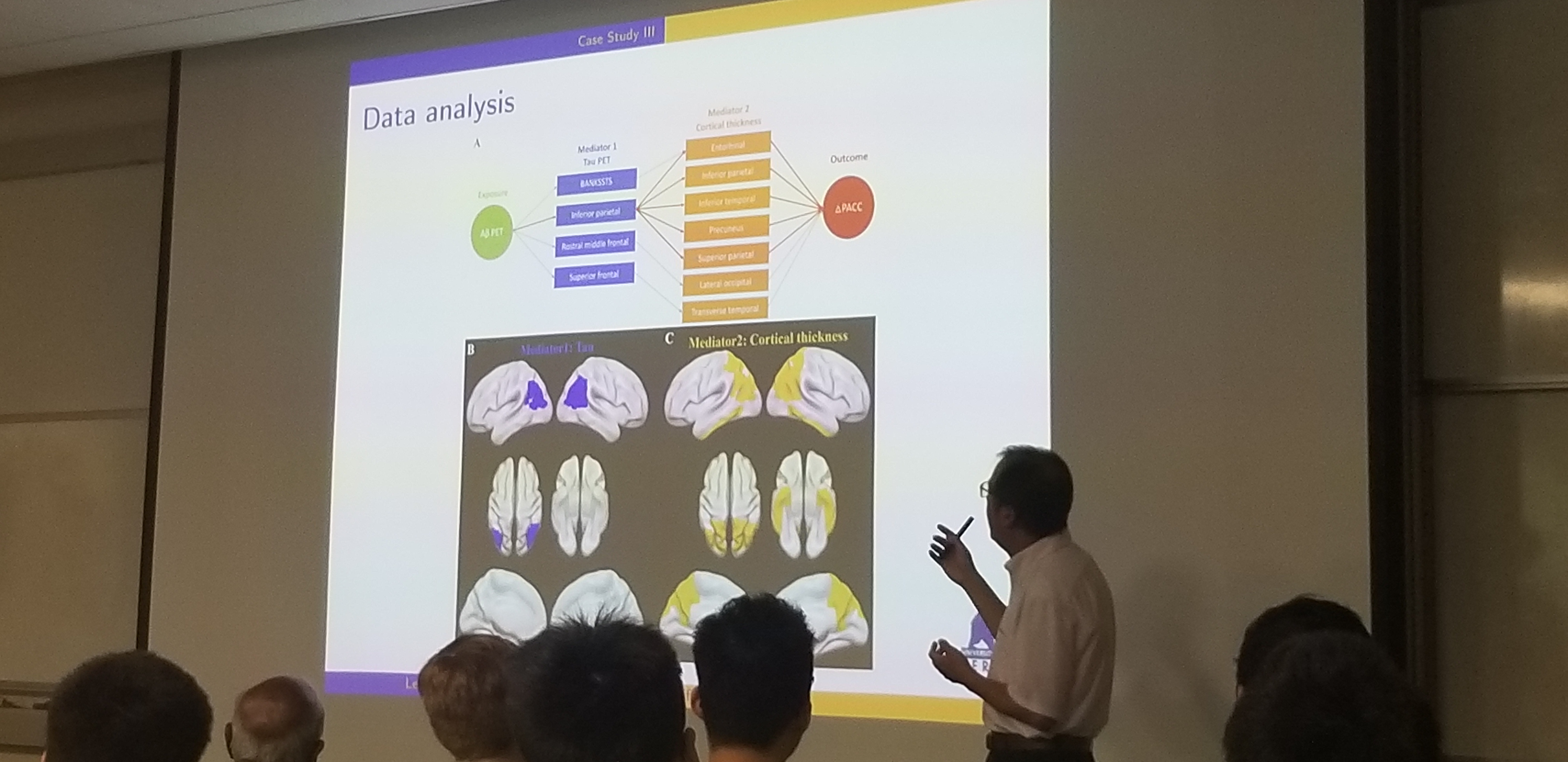
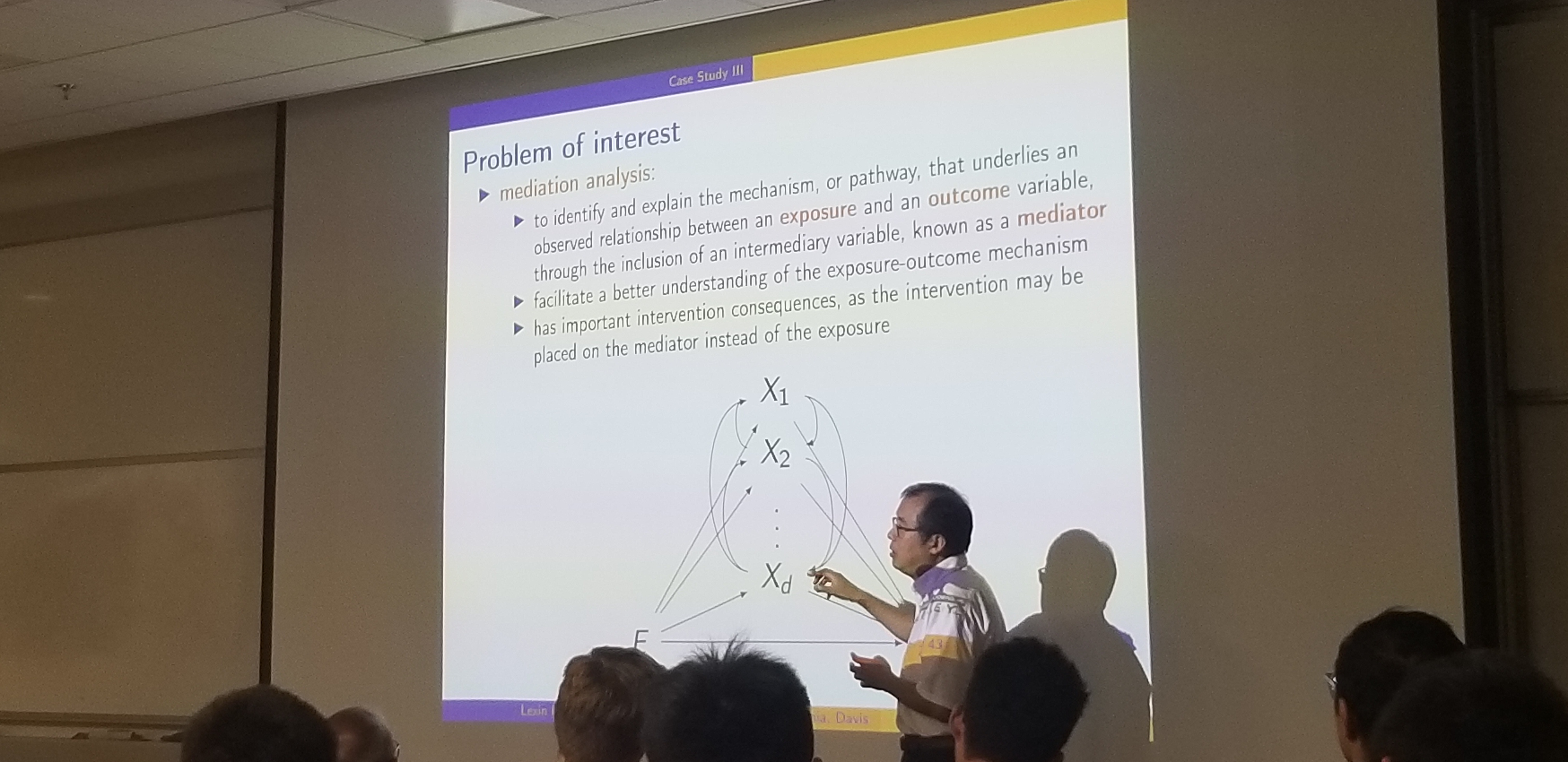
Case Study 3:
Skipped through, low on time
Took a picture of results